Author: Tom Greenwood

  • Strong Campaign Numbers Can Hide Who We Are Not Reaching

    Strong Campaign Numbers Can Hide Who We Are Not Reaching

    We recently argued that following-only feeds make it harder for emerging causes to be discovered by people who don’t follow them yet. But discovery is not only shrinking where feeds change. It also shrinks inside the tools campaigns pay for. 

    Let’s make this practical. Dirk wrote about it in politik&kommunikation on the example of framing the same issue for a political campaign in four different ways. While one version performed roughly 100% better than the weaker ones, others did about 75% better. The strongest frames were built around themes where a reaction was likely anyway, in our case corruption and national pride. The results told us how well each message performed, but not who it performed with, so they couldn’t tell us whether the campaign was growing its audience or only making the existing one louder. We took this question to our panel at the Political Communication Summit in Vienna and the answers were telling: unless campaigns work with separate target groups, comparable message tests and their own growth criteria, mobilisation and growth look identical in the overall results.


    Platforms Choose Who Sees Our Messages


    Platforms are built to find the people most likely to react. Given a goal, a click, a like or a sign-up, they show the message to the people most likely to deliver it, who are rarely strangers, often  followers, past engagers and people who resemble them. Engagement rises. Cost per result drops. It looks like progress, but the campaign is only getting better at talking to its own base. Message tests work the same way: the winning frame may simply be the one the base likes most. A 100% improvement can be a louder echo, not a stronger argument.


    Is Base the problem then?


    None of this makes the base the problem. As Gabriella Zutrau, senior advisor for digital strategy on Zohran Mamdani’s New York mayoral campaign put it: “Preach to the choir, because they will sing to the congregation.” Supporters are often the most credible route to people a campaign cannot reach directly, just as, in our last post, a large follower base worked as a distribution channel for big organisations. The mistake is treating the base as the destination, not as a medium or a channel, and never checking whether the message travels further.


    Why This Matters Beyond Individual Campaigns


    No organisation can grow by talking only to its own supporters. As Nick Bridge, founder of CRIIICKET put it from a commercial perspective: “If you keep aiming for the same customers, you run out of customers.” Elections, policy debates and social causes are rarely decided by people who already agree. They are decided by a movable middle: people who are not yet convinced but can still be reached. A campaign that only hears from its own circle cannot know what concerns people outside it, and has no chance of answering them. Only by reaching beyond that circle can organisations take other people’s concerns seriously, and then give them a reason to listen.


    What Organisations Can Do Now

    “Posting more”  is not a strategy when discovery gets harder. Neither is optimising harder for the same people. 


    Bringing the Same Messages to Different Audiences


    A message test is only useful if it tells us who each version reached. Start by defining the audiences before launch: the existing base (followers, past engagers and people who resemble them) and one or two groups outside it that the campaign actually needs, such as younger voters. Then run every framing separately within each audience, with the same budget, timeframe and goal, and exclude existing followers and engagers from the outside groups so they don’t quietly take over the results. Compare frames within each audience, not in one overall total. A frame that wins with supporters but falls flat outside the echo chamber will show up as exactly that, and a frame that holds up across audiences is the one that actually moves people. Who carries the message matters too: partners, creators and voices already trusted in those communities can reach people the campaign’s own account cannot.


    Looking Beyond Likes and Shares


    Likes and shares measure applause, and most of it comes from people who already agree. Better signals measure attention and movement. Gabriella Zutrau suggested watch time and hook retention: holding half your viewers past three seconds is good, and holding them to six means the content is actually working. Follow rate is another signal: views and shares show how far a post went, but follows show whether new people decided to stay. Decide these growth criteria before the campaign starts, so success is not defined afterwards by whatever number looks best.


    Accepting That Reaching People May Cost More


    People outside the base are less likely to react, so each result costs more. That is not a failure; it is the price of reaching people the campaign does not have yet. If base and growth audiences share one budget, the platform will tend to move spend to whichever delivers the cheapest results, usually the base. So give growth its own budget line and judge it by its own measure, such as cost per new person reached or retained, not cost per click. And give it time: results with new audiences often show up more slowly than mobilisation results.


    None of this solves the problem. Platforms will keep optimising for reaction. But testing across audiences, measuring growth instead of engagement and budgeting for growth is a starting point. At least then a campaign knows whether it is growing, or just getting louder. The useful question after a campaign is not only how well it performed, but who it became better at reaching.
  • Disinformation Is Not a Truth Problem

    Disinformation Is Not a Truth Problem

    Most responses to disinformation still start from the same flawed assumption: that people believe bad information because they lack good information.


    That is comforting. It is also wrong.


    People can build whole political ideologies on next to no information if those ideas give them something emotionally or socially rewarding. But spill coffee on a laptop and suddenly research starts to look like a very sensible idea.


    That contrast matters.


    It tells us that very little is working so far to solve the disinformation problem because old media thinking still fundamentally misunderstands user motivation and user experience.


    Our motivations are complex. Sometimes we seek truth. But much of the time, belonging, status or distraction matter more.


    People do not open TikTok to be lectured. And many do not see the relevance of spending energy learning a new skill like media literacy if it does not help them get ahead in the endless grind of modern social competition.


    This is the real gap in a lot of current anti-disinformation work. It treats the problem like pedagogy: explain better, fact-check harder, teach people how to think. All useful, up to a point.


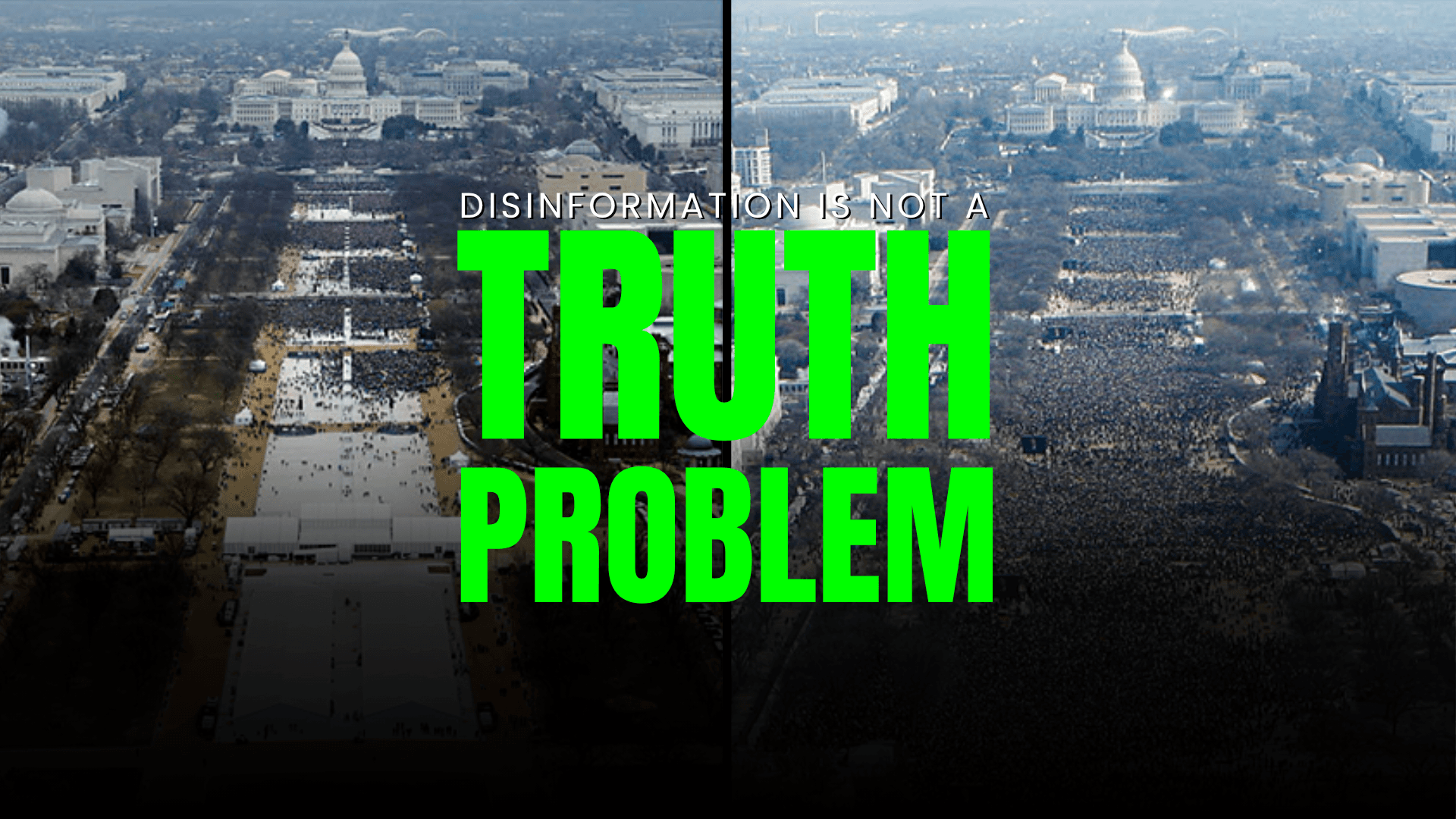
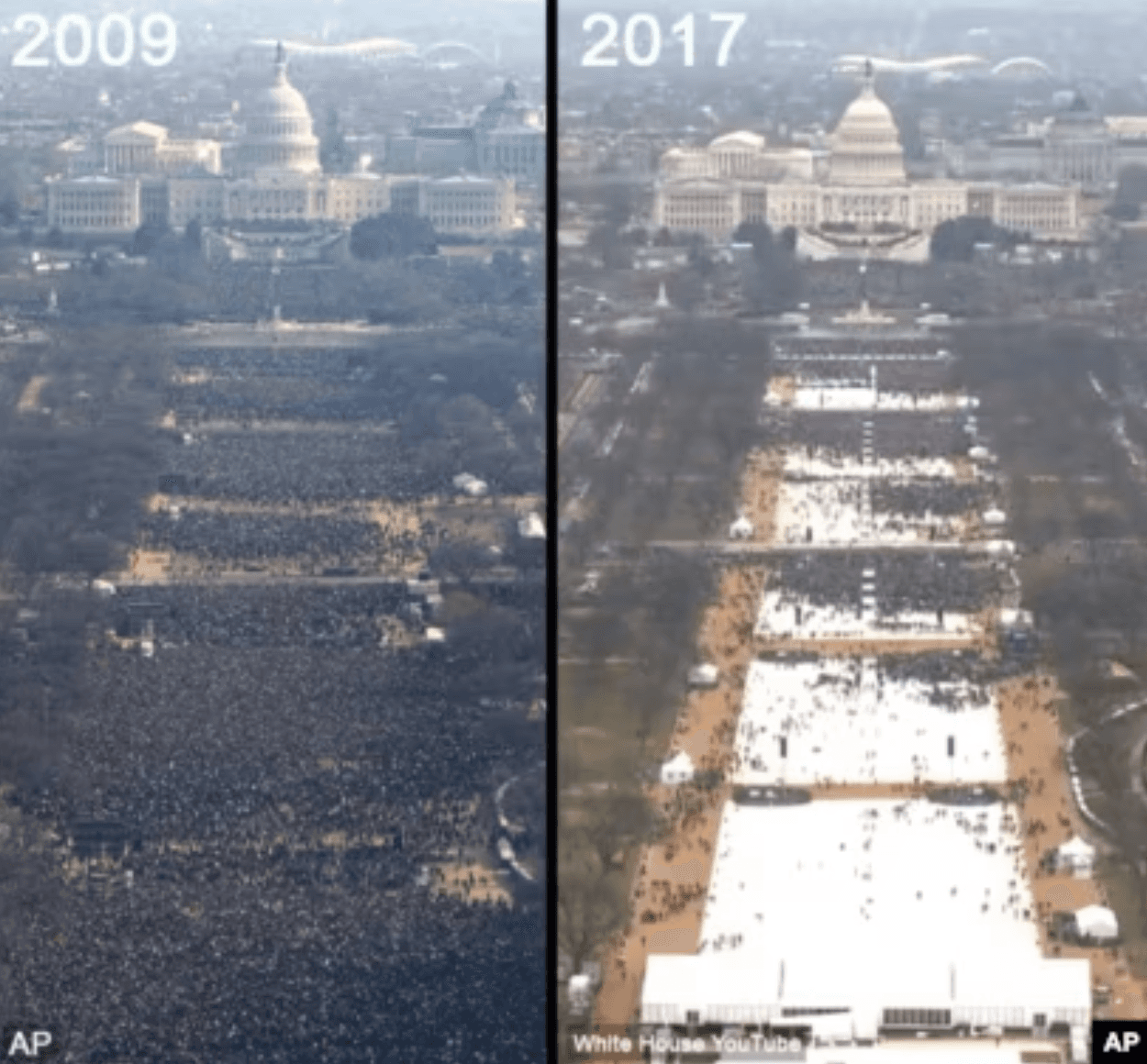
    (This widely shared comparison from the Obama and Trump inaugurations became a symbol of the “fact crisis”: the assumption that if people can be shown the evidence clearly enough, false claims will collapse under their own weight. In practice, things turned out to be much messier than that.)


    But disinformation does not spread mainly because it is convincing on the facts. It spreads because it is often better at meeting human needs.


    In that sense, disinformation behaves much more like marketing than like debate.

    It does not just sell a claim. It sells a feeling. A frame. A tribe. A role for the user inside the story.


    That is the shift in thinking that matters. The human layer of the disinformation problem is not mainly about knowledge. It is about social currency. It is about helping people belong.


    Once you start from there, a lot of things become easier to understand.


    It becomes easier to understand why lifestyle influencers often have more persuasive power than experts. Why podcasters and personalities were so instrumental in Trump’s success. Why anti-vaxxing, flat earth, QAnon and other forms of disinformation can become socially sticky even when their factual basis is weak or absurd.


    They are not just information systems. They are belonging systems.


    And if we are serious about competing for influence in the new digital reality, then we need to make media that meshes with how people work in the real world.

    That comes with implications.


    It means moving beyond organic social, which mostly reaches people who already like you. It means understanding that audience motivation matters as much as message content. It means accepting that reach, relevance and affinity now depend on format, personality, repetition and distribution as much as they depend on factual accuracy.


    That may involve lifestyle influencers. It may involve a smarter media mix across entertainment, personality-driven formats and other spaces that institutions usually dismiss as unserious.


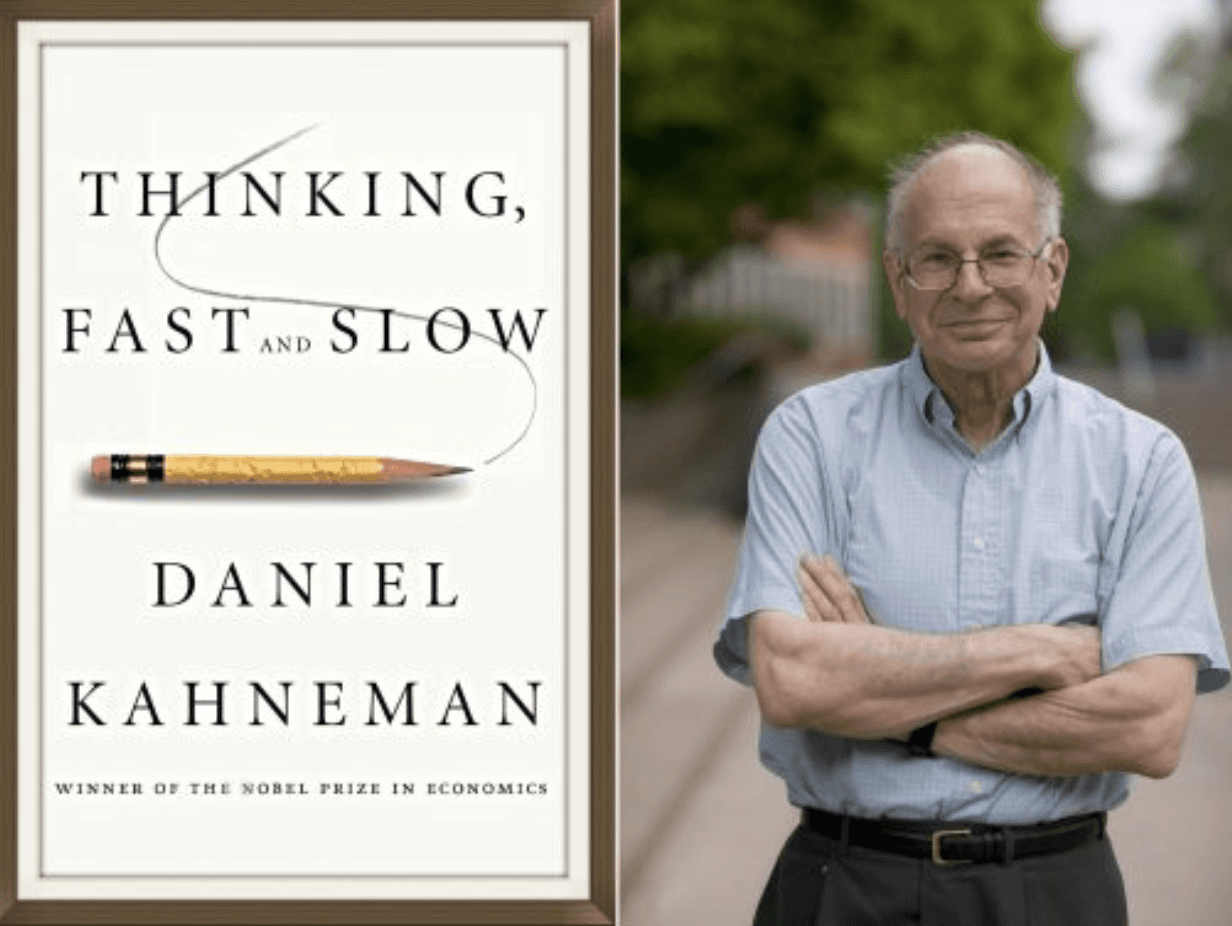
    (The book helps illustrate the older worldview many institutions still operate with: the idea that better information and better reasoning are enough to correct public error. The point of this piece is not that those things do not matter, but that they are not enough on their own in today’s media environment.)


    It may carry a price tag. But if we are serious about addressing disinformation and polarisation, then we need to get serious about the environments in which influence is actually formed.

    There is a precedent for that.


    When radio and television were the new media technologies, governments spent billions building their own influence machines: the BBC, ARD, RAI, PBS and others. For much of the last century, they enjoyed something close to a monopoly over the information flow.

    Those influence machines are not obsolete. But they now have a hundred million competitors.

    The monopoly is gone. The competitors include foreign states, grifters, conspiracists and cynical political operators. Many of them use behavioral insight, emotional targeting and smart distribution far better than most public-interest institutions do.


    So the answer is not to abandon old media. It is to build a healthier mix of old and new.

    Done properly, that would also be a major boost to fact-checking.

    Right now, algorithms mostly serve fact checks to people who already like facts.


    Our own analysis of 10,000 comments across 10 fact-checking organisations suggested that as much as 80% of engagement aligned politically with democratic values. In plain terms: the people engaging with fact checks often already know the facts, are among the least vulnerable to disinformation and may, to a significant extent, be using fact-checking content to meet belonging needs of their own.

    That is not a criticism of fact-checking. It is a distribution problem.


    User experience makes the internet go round. And good UX is simply about how well content or design meets the user’s motivation.

    So if we want fact-checking, civic information and democratic narratives to reach the people who really matter, then we need to increase motivation among the apolitical majority. We need to make engagement feel relevant, rewarding and socially legible to people who are not already bought in.


    The answer is still partly about good information, of course.


    But it is equally about building mainstream cultural affinity for the narratives that strengthen social cohesion, institutional trust and shared reality.


    And that is still not happening at anything like a meaningful scale.


  • Still Reeling From The Ad Ban? A No-Nonsense Readiness Audit To Help You Move Forward

    Still Reeling From The Ad Ban? A No-Nonsense Readiness Audit To Help You Move Forward

    After the initial shock of the EU ad ban, the next question is, “What now?” My answer is always the same: Stop guessing and start assessing. Hope is not a strategy. The organisations that will thrive in this new landscape are the ones who are brutally honest about their capabilities—and their weaknesses—right now.


    TL;DR:


    An effective readiness assessment is your roadmap for the post-ad ban world. It’s a systematic process to diagnose your digital maturity, get key stakeholders aligned, allocate your limited resources wisely, and build a plan to bridge the skills gaps you almost certainly have. This isn’t about creating a perfect strategy; it’s about making urgent, confident decisions to pivot fast.


    Step 1: The No-Nonsense Digital Maturity Audit


    First, we need a reality check. I’ve seen too many organisations claim they’re “doing digital” when they really just have a social media account and a newsletter. A proper audit measures your capabilities across six critical domains:


    Strategy, Operations, Technology, Data, People, and Governance. 


    Let’s make this real. Imagine a mid-sized environmental non-profit we’ll call the “EuroPond Conservancy” (EPC). They’ve been leaning heavily on Meta ads for petition signatures and small donations. Their team is small, and their one “digital person” is completely swamped.


    We’d run them through the audit and score them on a scale of 1-4 for each domain. Their results might look something like this:


    • Strategy: 2/4. They have a documented strategy, but it’s not socialised or integrated into their daily work. It’s a PDF gathering dust on a server.

    • Operations: 2/4. They have some digital workflows, but they’re clunky and disconnected from their core fundraising operations.

    • Technology: 2/4. They have a basic CRM and an email tool, but nothing is truly integrated.

    • Data: 1/4. Reporting is done in spreadsheets, metrics are limited, and nobody trusts the numbers. This is a huge red flag.

    • People: 2/4. They have one defined digital role, but no cross-functional team or specialised skills.

    • Governance: 1/4. There are no clear policies for digital channels, and approvals are ad hoc.


    EPC’s Total Score: 10/24. According to the framework, that’s Low Readiness. This score isn’t a judgment; it’s a diagnosis. Now they know exactly where the pain points are; where they  have specific weaknesses in data, governance, and strategy.


    Step 2: Figure Out Who Actually Matters (Stakeholder Mapping)


    Next, EPC needs to understand its internal politics. Every organisation has a complex web of influence, and if you don’t map it, you’ll get tangled in it. We use a simple


    Influence-Interest Grid to categorise people.


    For EPC, it breaks down like this:


    • High Influence / High Interest: The Executive Director and the Board. They need to be managed closely with frequent, concise updates.

    • High Influence / Low Interest: The Head of Finance. S/he doesn’t care about the tech, but s/he can approve or kill the budget. S/he needs to be kept satisfied with clear ROI projections.

    • Low Influence / High Interest: The program managers and the fundraising team. They are the most affected by this change but can’t sign the cheques. They need to be kept informed and involved in planning.

    • Low Influence / Low Interest: Front-line staff and volunteers. They need occasional, high-level communication so they understand the direction of travel.


    By plotting this out, EPC can stop communicating with everyone in the same way and start tailoring their approach to what each group needs to hear. 


    Step 3: Face the Gaps in Your Resources & Skills


    This is where the conversation gets uncomfortable—and productive. EPC needs more than just a plan; they need the budget, people, and skills to execute it. A Resource Inventory is non-negotiable. 


    Their inventory reveals a stark reality:


    • Budget Gap: They have €50k, but an effective multi-channel strategy will require €120k. They have a
      €70k gap. 

    • Staffing Gap: Their one digital marketer can’t do it all. They need three specialists. A
      2 FTE gap. 

    • Skills Gap: Their team has basic skills, but they need advanced SEO copywriting and data analysis expertise. The gap is High. 


    Now they can have a real conversation. Do they reallocate fundraising budget? Do they hire, or do they outsource to an agency?  This moves the problem from a vague “we need to do more” to a concrete set of choices.


    Step 4: Build a Plan for Movement, Not Perfection


    With a clear diagnosis, EPC can finally act. But in a risk-averse culture, change is hard.  We need a framework for that, too. I recommend an


    ADKAR-based approach: create Awareness, build Desire, provide Knowledge, foster Ability, and Reinforce success. 


    For EPC, this means showing quick wins from a small pilot campaign to build desire, providing hands-on training labs to build knowledge and ability, and celebrating the results in all-staff meetings to reinforce the new direction.


    To get that pilot launched, they don’t need a six-month committee meeting. They need a rapid-cycle review process. A one-page proposal, a 48-hour compliance check, and an executive sign-off.  This is how you move fast.


    This whole assessment, from audit to action plan, can be done in a few weeks.  The goal isn’t to create another dusty strategy document. It’s to build a resilient, agile organisation that can navigate the new reality without the platforms it once depended on. Read more about Impact Engineering.


    Step 5 (Optional): Digital Readiness Reality Check


    If you’re wondering how your own organisation isfaring in terms of readiness, this 6-question quiz could give you an objective look at how well you’re doing.

    1. Which statement best describes your digital strategy?


    • A) We don’t have a documented digital strategy; our efforts are reactive / ad hoc.

    • B) We have a strategy document, but it isn’t well-known or integrated into our daily work.

    • C) Our digital strategy is clearly documented and aligned with our organization’s main goals.

    • D) Our strategy is constantly being optimized using real-time analytics and performance data.

    2. How would you describe your digital operations?


    • A) Our processes are siloed and mostly manual.

    • B) We have some defined digital workflows, but they’re inconsistent across teams.

    • C) We have effective, end-to-end digital workflows for key activities like campaigns and reporting.

    • D) Our workflows are in a state of continuous improvement and are becoming increasingly automated.

    3. What does your marketing technology stack look like?


    • A) We use a patchwork of legacy systems and ad hoc tools that don’t connect.

    • B) We have basic digital tools (e.g., for email), but they aren’t integrated with each other.

    • C) We have a fully integrated marketing stack where our CRM, email, and analytics tools work together.

    • D) We use an advanced, automated, and possibly AI-driven platform to manage our digital efforts.

    4. How does your organization use data?


    • A) We track very limited metrics, and most of our data lives in spreadsheets.

    • B) We have basic dashboards, but they don’t really drive our strategic decisions.

    • C) We rely on real-time reporting to guide our campaign tactics and resource allocation.

    • D) We use predictive analytics to forecast outcomes and identify opportunities before they arise.

    5. How is your team structured for digital success?


    • A) We don’t have any dedicated digital roles; it’s just a part of someone’s job.

    • B) We have at least one person with “digital” in their title, but they largely work in a silo.

    • C) We have cross-functional teams that collaborate effectively on digital initiatives.

    • D) We have a digital “center of excellence” that sets standards and drives innovation across the organization.

    6. What is your approach to digital governance?


    • A) We have no formal policies, and approvals are completely ad hoc.

    • B) We have policies drafted, but they aren’t well-known or consistently enforced.

    • C) Our digital policies are well-established, understood, and consistently enforced.

    • D) We have a mature, risk-based compliance system that actually enables us to move faster.


    Scoring Your Results


    Now, add up your total score to find your readiness level, give yourself points for each answer:


    • A = 1 point

    • B = 2 points

    • C = 3 points

    • D = 4 points


    What Your Score Means


    • Score: 19-24 — High Readiness
      You’re in a strong position. You likely saw this coming and prepared. Your challenge isn’t survival; it’s optimization and seizing the opportunity. While others are scrambling, you should be focused on pulling ahead and capturing the attention they’re losing. Don’t get complacent.

    • Score: 13-18 — Moderate Readiness
      You have some foundational pieces in place, but you also have critical, exploitable gaps. You’re not starting from zero, but you are vulnerable. The time for incremental change is over. You need to act decisively on your weakest domains—especially Data and Governance—now.

    • Score: 6-12 — Low Readiness Let’s be blunt: you are unprepared. The ad ban poses a serious, potentially existential risk to your mission. Stop everything else and make this your top priority. A full readiness assessment isn’t optional for you; it’s an emergency procedure. The clock is ticking.


    Want to learn more about how to set your team up for long term success? Reach out below and let’s talk about how to get you there.

  • What European NGOs Lost This Week

    What European NGOs Lost This Week

    The day the music died for European political and social impact marketing was October 6, 2025.

    It’s a date I’ve had circled on my calendar for months, not with anticipation, but with a sense of profound frustration. This isn’t a surprise meteor strike; it’s a slow-motion train wreck we’ve all had a front-row seat for.


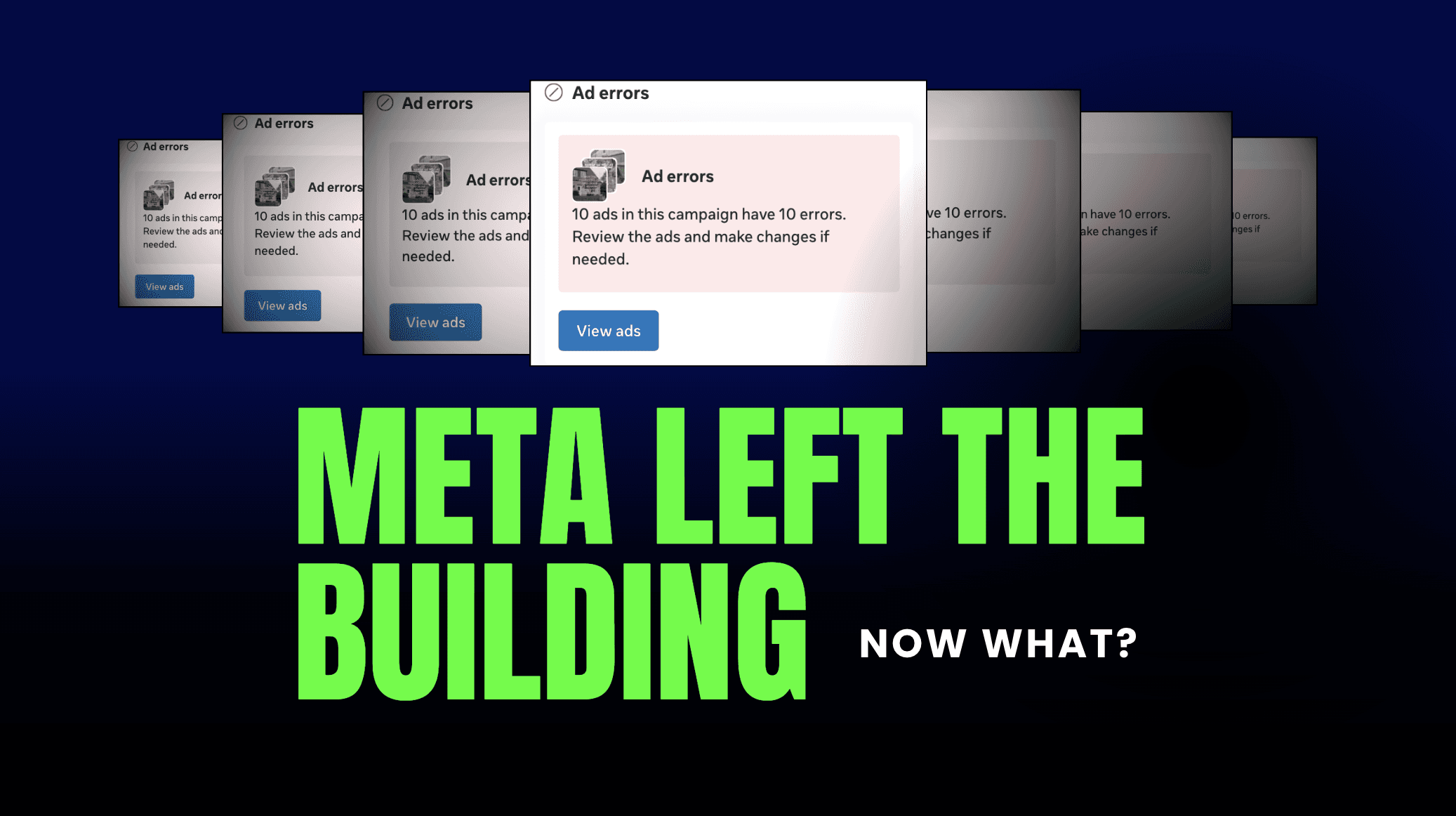
    Google discontinued political and social ads way back in November 2024. Meta followed suit this past July, officially announcing that in October they were packing up their ball and going home rather than deal with the EU’s new TTPA regulation. So.. here we are, less than 24 hours after the hammer fell, and the panic I’m seeing is palpable. Many organisations are acting like this is brand-new information. It’s not.


    The true impact won’t be seen until after experimenting on Google and Facebook in the coming weeks to see if there are creative workarounds. But.. If it becomes impossible to run ads about political and social issues, then the fallout won’t be just about finding new ad space; it will be about rediscovering how to navigate a city that’s about to lose its main roads.


    This Is So Much Bigger Than Ad Spend


    The real loss isn’t the money. The real loss is the machinery.


    For years, I’ve watched organisations—especially the smaller ones—build their entire fundraising strategy on the back of Meta’s incredible efficiency. 


    They weren’t just buying ad space; they were buying a sophisticated engine that was, frankly, up to 60% cheaper and infinitely more precise than traditional media. On October 6th, that engine got switched off. These foundational capabilities will vanish with it:


    • Precision Targeting: The ability to speak directly to a small community in a specific town about a local issue

    • Lookalike Audiences: The almost magical ability to find new supporters who behave just like your most dedicated current ones. This is how NGOs and political parties did most of their fundraising.

    • Real-Time Optimisation: The power to see a campaign underperforming at 10 a.m. and have it fixed by noon.

    • Rapid Crisis Response: The capacity to get a critical message out to a highly specific group within an hour of a major event.


    As the leader of one Danish NGO that spent around EU15k per month on Meta ads to generate donor leads noted, “Meta worked… Now, we’re forced to turn to more expensive and less agile communication strategies”. He’s right. For many, this will be like being forced to trade a scalpel for a sledgehammer.


    The Great Divide: The Agile vs. The Anchored


    Ever since Google’s announcement last year, I’ve seen the market split into two clear camps.


    On one side, you have the smaller NGOs. For them, this impending change is an acute threat. They were David fighting Goliath and Meta’s platform was their slingshot. As much as they disliked Meta, it levelled the playing field for them. This week, that slingshot breaks. Many lack the large-scale email lists, brand recognition, or diversified budgets to pivot effectively. They are, to put it bluntly, about to be dangerously exposed.


    On the other side are the larger, more established organisations. They’re not immune. They’re about to lose enormous amounts of integrated campaign data and tools their teams spent years mastering. But they have other muscles to flex: established donor databases, significant organic reach, and brand authority. They’ll survive, but they are now scrambling to recalibrate strategies that were on autopilot.


    But there’s a third group: the one everyone should have been studying since November. The unexpected winners.


    These were the organisations that, by foresight, saw the risk of building their house on rented land. They’ve spent the last ten months cultivating strong email lists, investing in their website content, and exploring communities on TikTok and LinkedIn. They didn’t just prepare for the earthquake; they built on solid ground and are now positioned for a competitive advantage. One arts nonprofit I followed started their pivot to a multi-channel strategy last winter; they’ve already seen a 52% increase in individual contributions because their foundation was never built on a single, fragile platform.


    And of course, in politics, this is what the far right populists have been doing for years – building massive cross channel organic followings.


    This wasn’t an accident. It was the result of a strategic decision to own their audience and their data.


    The Platform Dependency Bill Is Coming Due


    The strategic imperative is clear. This isn’t a temporary storm to be weathered. It’s a permanent climate change. Success will no longer be about mastering a single platform’s algorithm. It will be about building a resilient, multi-channel presence that you control. It will be about authentic storytelling, genuine community building, and high-quality content.


    It’s time to start writing a new playbook. The first step is a clear-eyed assessment of where you stand. Read more about assessing your digital readiness in my next post here on Logiq.media.


    This isn’t the first (and won’t be the last) time we’ve written about this. Read more here:


  • How Zohran leverages audience insights

    How Zohran leverages audience insights

    Around 6 months ago, something strange happened to me on Instagram. Zohran popped up in my feed for the first time. And instead of the usual sense of impending doom I get from Insta, I binged his reels into the small hours with a smile on my face, and the feeling that maybe everything’s going to turn out ok after all. 


    Skip ahead if you are already familiar with Zohran Mamdani: he’s the Democratic nominee for mayor of New York City, with an impressive list of endorsements and effective “vibes campaigning” that blends politics with culturally savvy media strategy.


    So this is about …


    Zohran’s strategy


    How does he get 4.1 million Instagram followers (with up to 700k likes on some videos) while thousands of other earnest, nice young men with what seem like very similar ideas, rarely get past a few thousand views? 


    Yup, of course he’s charismatic, authentic, authoritative, credible, likeable, all the buzzwords.

    And yup, of course his stuff is really well produced. Massive kudos to Melted Solids, the agency behind his social. 


    But what’s as important as all those elements combined is how he leverages audience insights. More specifically, how he uses data to understand his audience, to understand their pains – the issues they’re struggling with – and to offer them the solutions they need. 


    New Yorkers’ big pain is being priced out of their own city. Zohran talks about other issues with remarkable authenticity too (notably Palestine), and he frames himself as the good guy underdog against sleazy opponents (Cuomo and Adams). But his core message is about making life better for his audience – about solving their problems.


    This video says it all.


    Lessons from behavioural science


    “Pain point” marketing is a basic concept in business: People are highly focused on their own problems, and they’re motivated to engage with solutions. 


    Most products are about solving problems for consumers. We buy new stuff to make life easier, smoother, more comfortable. 


    And we buy stuff to try to solve the problem of loneliness, isolation and status. That’s aspirational marketing (which is another category.) 


    Look at any commercial through this frame though, and from you’ll see how it broadly fits into one or both of these two categories.


    Why is advertising like this? Because it works. 


    Advertising is behavioral science applied to the real world: it’s the study of which inputs (messages) produce which outputs (behavioural responses).


    If it didn’t drive sales, brands wouldn’t do it.


    Politics as product


    Zohran’s agency, Melted Solids, are former product marketers who wanted to do something more with their careers than sell people stuff they don’t need. Good on them.


    They’re applying behavioural science / advertising smarts to lift their client’s brand awareness and affinity. 


    But Zohrans’ playbook – connecting with his audience’s pains, framing himself as being on their side against a common enemy, talking their language, echoing their style – isn’t unique. 


    Here’s the AfD’s Alice Weidel talking about the corruption, bureaucracy and the anti-democratic elitism of her opponents. 


    Here’s British far-right activist and anti-Islam campaigner, Tommy Robinson’s pain and anger and easy solutions. 


    And here’s Trump’s jaw dropping Truth Social.


    The same playbook – use pathos to tell stories that resonate with your audience – has been used since Plato.


    The difference now is that algorithms segment automatically and effectively, to serve people stories they want to engage with. That’s squeezing out the old, less-media-savvy establishment. A quick look at the engagement data shows their stories aren’t working.


    Products solve problems. So should politics. But for a large section of the population in the US and Europe, politics as usual isn’t solving their problems. All they’re seeing is wage stagnation, price hikes, services going downhill. 


    Polling of swing voters across Europe and the States echoes the perception that the establishment parties are just more of the same – it’s not working, so screw it, let’s roll the dice. 


    Where to get audience data


    Here’s a simple example of how to begin incorporating audience insights into messaging strategy.


    I’m doing a fundraising project at the moment for a Danish NGO sending aid to warzones. So the first place I began when I started developing messaging is with the audience data on their social media. 


    You can find this in Meta Adsmanager / Audience insights.


    And then turning data into insights just takes a bit of logic, empathy and life experience. 


    My first idea for this NGO was to try to connect with their audience’s fear of global instability, and try to motivate donations by connecting Putin’s expansionism with their own kids’ futures.


    Looking at the data though, the audience is mainly into tabloid news, domestic causes like Breast Cancer, discount shops and comedians on the less cerebral end of the spectrum. 


    It’s a less educated, working class audience that’s probably less focused on international issues. And looking at the engagement on the NGOs posts up until now, that hypothesis is born out in the data there too. 


    So I moved away from the global narrative to other hypotheses: impact (what we’re doing is actually working), localism (people just like you are giving their time and money across the country), the ww2 parallels (the resistance and fighting the bad guys), and then a bunch of “inspiring” stories of protagonists overcoming adversity – stories with nice emotional payoffs, and good energy.


    I’m looking to do the kind of stuff that goes down well with our target demo on social. And the key insight is that people on social media aren’t looking for information. They’re looking for entertainment – something to help them through the stresses and boredoms of their everyday life by giving them a few moments of new emotional energy. 


    And then, after we’ve developed media assets out of these hypotheses, we’ll keep an eye on the engagement data and see what’s working and what’s not. And very simply we’ll do more of what works and less of what doesn’t. 


    Everything is an experiment. We’ll get further insights from how people respond.


    Connecting audience insights with strategy


    One more example, this time with a quantifiable outcome. 


    We ran a simple experiment for Action Aid Denmark, creating new messages based on audience insights to see how much more effective we could be at getting people to sign climate petitions. 


    So we did some research, looking at their audience, competitors, the conversation and the culture around climate.


    And the big insight we got was that although up to 88% of Danes are worried about the climate, very few engage with climate content. 


    So why is that? Obviously it’s because the current stories aren’t working for them.


    And that’s probably because most climate content just repeats the same climate emergency story that they’ve heard a million times before. 


    We figured that if people are worried about something (a pain) but they’re not getting a solution, there’s a disconnect. So we came up with a few different hypotheses angled towards solutions. 


    We turned those hypotheses into quick creative ideas, put them out there and got up to 27% cheaper ad costs per petition signature. 


    Check out the more detailed case study here.


    Democracy needs to catch up


    This applied behavioural science (aka digital advertising) is what I learned on private sector projects with brands like Apple and Novo. It’s what Zohran’s team is definitely doing. 


    And exactly the same techniques are being applied with devastating effect by very smart disinformation strategists in Moscow and St Petersburg. And by Tommy Robinson’s team and Charlie Kirk’s team and Trump’ team. 


    The tools are apolitical. They’re just tools. The ethics comes in the ideas they’re applied to.


    And in 2025, the only places that aren’t using these tools, unfortunately, are the NGOs and the centrists and the democrats, the UN and the EU. And that’s a big part of why democracy – the thing they’re desperately trying to protect – is going downhill.


    Other tools


    You can get a long way with free tools for audience insights. 


    • Google Trends shows the relative popularity of search terms over time, indicating public interest in specific topics.


    • Answer the Public collates and visualises search engine queries, revealing the specific questions people are asking.


    • More in Common has really nice open source polling 


    • LLMs – trying asking “what are the pains of my INSERT TARGET AUDIENCE?”


    And if you’ve got deep pockets you can pay for big data tools that’ll mostly tell you what you already knew or guessed.


    Talkwalker, Brandwatch, SEMRush etc are all examples. But start with the free ones, learn how to use them and then expand when you reach the limits of what you can do before you think about paying.


    Reach out if you want to talk about how you can use audience insights to increase the resonance of your org.


    And if you’re interested in more new media solutions to the political chaos that arrived with social media, follow us on LinkedIn.

  • After October: How NGOs and Political Parties Win Without Paid Ads

    After October: How NGOs and Political Parties Win Without Paid Ads

    Meta and Google are discontinuing paid political ads from October. That is a disaster for the democratic project. The populists have spent the last ten years growing massive organic followings which they will capitalise on now.


    Most democrats and rights activists, on the other hand, never really got a sophisticated grasp of the tech. And because they were incentivised by fundraising targets and easy access to supporters, they’ve inadvertently shrunk their organic reach with content that works for their biggest fans (but few others besides).


    So this is a semi deep dive into how political orgs and NGOs can get the most out of their organic social media, and drive real social impact and revenue, after October.


    1. Use brand ambassadors from within your organisation 

    Humans like to interact with humans, not faceless organisations. Platforms know this. They employ armies of behavioural scientists and psychologists, and they monitor every click to keep track of what we want. So they downgrade organisations’ organic reach. 


    Individuals have a much better chance of getting traction. So after October, organisations that understand digital media will increasingly leverage their own staff as brand ambassadors, using their voices to grow awareness and strengthen affinity with their organisational brands.


    People judge other people by the company they keep. It’s the same for organisations. If you’re an NGO or political party and you have sparky, dynamic, interesting people working for you – that will brand you as a smart, dynamic organisation with ideas worth listening to.


    This is a good example with Dr. Aqsa Durrani for Doctors without Borders. 


    It’s harrowing. But it works on social media for several reasons. It’s a story about her work – not a direct appeal. It’s personal, it’s extremely emotional and her charisma stems from her authenticity, compassion and expertise. 


    But of course, choosing the people within your organisation who have a chance of getting traction is the key challenge. So how do you do that? Look at their own social media. Listen to how they communicate in real life – Are they clear? Do they avoid jargon? Are they humble? Do people enjoy their company in real life? 


    You may have to negotiate new contracts – and potentially pay raises – with them, but if executed well, it will be worth it.


    Then, use your comms team to develop content ideas for them, as well as executing the creative, posting and do the data analysis, so that their new social media responsibilities are manageable on top of their actual job. 


    1. Build followings by giving value


    The work of humanitarians is so much more interesting than what most people do with their 9 to 5. But the comms of most humanitarian agencies just doesn’t reflect that.


    And a big part of the reason why NGO comms tends not to get much organic traction is that a lot of it looks the same. People have seen similar content before. They assume they know what it’s going to say, so there’s no need for them to engage.


    Let’s get back to the brand ambassador idea. 


    Try looking at this from the perspective of a mostly apolitical person on the train on their way to work. As she scrolls, she sees a serious-looking UN worker in Chad telling her there’s a famine. Yup, the world is a mess. She still has to go to the office and put in 8 hours. That’s where he mind is right now. That’s stressful enough already, without having to think about Chad, so she scrolls on past. 


    But if she sees the same person talking about what made them give up the kind of daily grind she’s on her way to, and why they started doing something they really believed in – maybe that would grab her attention. And then maybe she’ll pay attention when they’re talking about an issue that really counts.


    Rutger Bregman talks about this in his book Moral Ambition – about energising bright young things to choose meaningful jobs instead of bullshit jobs. If that’s going to happen at scale, we need to make those jobs something that these bright young things aspire to. That happens by changing the conversation and building popular interest in interesting things.


    1. Think User eXperience – You can’t get it wrong but you can get it dull


    Most people don’t use social media to access information. They use it for entertainment. It’s a little dopamine vacation from the stresses and boredom of their everyday lives. We’re all too aware of the horrors of the world, and most people want to forget them.


    So the challenge – as always – is how do we present these harsh issues in ways that motivate people to want people to engage?


    People don’t want to watch things they’ve seen before. They’re allergic to boredom. They gravitate to freshness, to new experiences, to new emotions, to new things, to new ideas, to secrets, to inside access, to wonder, to hope, to ingenuity.


    Tell stories. Use process. Use emotion.


    This gets some people working in the sector down. They think this stuff is gimmicks. They think people should care. And yes they probably should, but this is also just human nature – people naturally focus on their local area more than on the wider world, and they shy away from sadness. 


    We believe that working within the parameters of the tech – using it as effectively as we can – is the best way we can stand up for our values, and prevent truth and democracy from sliding even further. 


    1. Do the stuff that the algorithm likes


    Algorithms turn up organic reach when they see people engaging. And you can boost the potential for that by increasing the ways that people are going to see it. 


    • Encourage other people in your organisation to repost (obvs).  

    • Tag people who have relevant followings, and engage with their ideas in your content. Give them a reason to engage with you on more than a surface level, and their audiences will see that interaction and learn about you through it.

    • Build partnerships with organisations that have the audiences that you need (for example, the podcast that Dr Durrani is featured on in the instagram post above.)

    • Organic sharing – remind people to share if they liked your content. At the very least, give them a nudge to follow. 


    That’s the tactics. But for the strategy, “Contagious” by Jonah Berger is a good place to start on how to optimise your content’s shareability. 


    1.  Get on top of the data


    AB testing is a tool that is standard in the private sector. It’s standard in our opponents messaging too. But most people working in politics and NGOs have never heard of it. That’s a real problem.


    It’s the reason Trump won and Brexit happened. 


    And we’ve used it to grow support for climate and human rights orgs by up to 42%, and grow audiences by up to 100k.


    So what is it? In a nutshell, it’s this: We have two different ideas. We think both of them could be good, but we’re not sure which one is best. So we show version A to half our audience and version B to the other half, and we get concrete data on which one gets the most engagement. 


    If done with skill, iterating based on this data almost guarantees that you will optimise your engagement and ability to influence the conversation. 


    AB testing is about to be taken away on political ads – the platforms in-built AB testing tools don’t work on organic content. 


    But we can use the methodology on our organic posts if we’re smart and methodical. Here’s how to do it.


    Start by thinking about what would motivate people to engage with your organisation, and develop then hypotheses. For example, “people want to see impact. If we can show that we are actually driving impact, and helping solve a challenge they care about, then we will get an X% lift in average engagement.” 


    Or, “People worry about the future of the world for their own kids. If we can connect global instability to their own families’ well being, we will get an X% lift in average engagement.”


    Build content based on your hypotheses, put it out there, and keep track of the engagement data (how people respond) in a spreadsheet.  


    Use that data to underpin constant small strategic shifts. 


    1. Leverage influencers


    Influencers are the next best thing to paid ads. They’ve already done the hard work of building a following – an audience that trusts them, engages with them, and pays attention to what they say. When you collaborate with them, you’re not renting access to that audience, and you’re the trust and affinity they’ve cultivated.


    This can take two forms. The first is sponsored content – paid partnerships where you brief the influencer, co-create content, and pay them to post. Done well, this gives you predictable access to their audience. 


    The second is authentic collabs – working with influencers who already have a natural interest in your cause. Maybe they’ve spoken out on climate, migration, or human rights before. Maybe their personal story overlaps with the values you want to promote. 


    The challenge is to match your issue with the right messengers. Influencers come with their own communities and cultures – gaming, lifestyle, activism, even parenting – and your job is to figure out which of those communities could be mobilised around your cause: If the influencer doesn’t genuinely care about your issue, their followers will smell the disconnect.


    Interested in media solutions to big social challenges?


    Follow us on LinkedIn if you want more on how to build real support in a post-ads world. Share our content if you think it could help others. And if you want to talk about partnerships – whether that’s audience building, fundraising, social impact, training, strategy or full-stack comms – just reach out.

  • Europe’s Information War Is Really a Clash of Philosophies

    Europe’s Information War Is Really a Clash of Philosophies

    Yesterday, Ursula Von der Leyen announced that the EU is creating a new unit to counter disinformation.


    Disinfo and populism are tearing the EU apart, but it’s not just because trolls and populists leverage bald-faced lies. The facts aren’t actually what’s most important here. What’s important is what people believe. And the reason the trolls are winning is because they tell stories that work for the segments they’re targeting.


    Often, those stories paint institutions like the EU as the cause of their targets’ pain. Every story needs a good bad guy, after all. And as trust in the trolls’ narratives grows, trust in institutions declines.


    And so if the trolls’ win by undermining trust, then the best way to respond isn’t with fact checking. Fact checking doesn’t work (not least because the only people motivated to engage with facts are the people who value facts already). The best place to start is by strengthening trust in institutional brands.


    Enlightenment vs. Romanticism


    Charlelie Jourdan makes the point that Brexit didn’t start in 2016. It began when the EU never bothered to show Brits how it was a win for them. The areas of Britain with the highest levels of EU funding were the places that voted hardest for Leave. If an institution doesn’t tell a compelling story / brand, it leaves itself as an open target.


    So this digs into why the EU, the UN, most centrists and most NGOs fail so spectacularly at building mainstream affinity with their brands. 


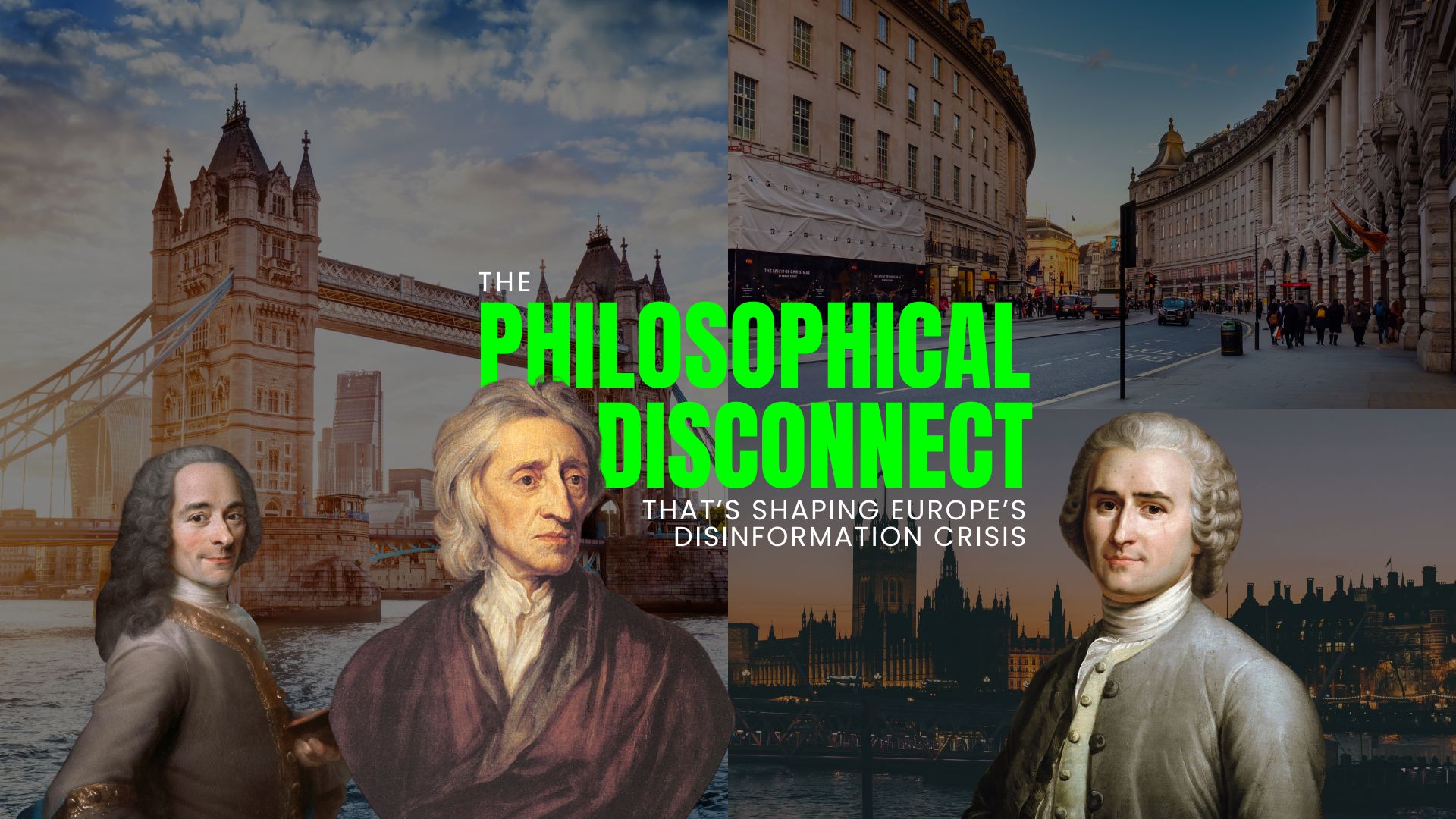
    And probably, first and foremost, it’s a philosophical problem. All the people that run government and NGOs, the EU and the UN are enlightenment thinkers. They love ideas, and they believe the best ideas will win in the end.


    The thing is that that’s not compatible with how most people work. Almost everyone else is a romantic. We’re driven by our emotions, by our perceptions of in-group and out-group, culture, belonging. We’re not motivated to seek truth. We’re motivated to get on in the world, to find our place and prosper. Sometimes truth is useful for that. A lot of the time it’s not.


    Take religion, which is probably the most successful example of an ideological meme. I don’t think we need to discuss the factual validity of Jesus’ ascendance to heaven on the third day. Instead, what’s far more interesting to look at is the trajectory of the various religious memes over the millenia in how they perpetuated or died out according to the opportunities they afforded their followers for social currency, grouping and power. 


    The illusion of consensus


    Religion was, in many ways, the first mass media. Churches and temples pushed out on-brand messaging in every village for a thousand years.


    Now, media is digital. And it is very much the catalyst for democracy’s decline. And it’s worth looking at how philosophy determines our approach to media creation. According to enlightenment philosophy, if we put out an idea, that’s our job done. The idea will win in the end if it’s good enough (and our ideas are the best, of course). That makes it very difficult for enlightenment thinkers to understand how new media works.


    Enlightenment thinkers enjoyed a couple of hundred years where their ideas dominated. And that dominance entrenched the belief that ideas win on their strength alone. But actually, between the invention of the printing press and the advent of “The Facebook”, media was enormously expensive to produce and distribute. That meant it was scarce.


    So for a long while it looked like the enlightenment ideal was working out really rather well. In fact, what was happening was that consumers didn’t have much of a choice. So we had an illusion of consensus because a few enlightened thinkers got to decide which ideas got traction. 


    Algorithms don’t care about truth


    Now, anyone can put out anything, and anyone can engage with anything. And no one voluntarily engages with stuff that doesn’t interest them. (Quite obviously) 


    Algorithms aren’t designed to spread hate or to suppress democratic ideas (as many in the enlightenment community mistakenly believe). They’re designed to optimise for clicks. It works like this: if more people than average watch a video through to the end, the algorithm will categorise the kind of people who are watching, and it will show it to more people whose previous online behaviour puts them in the same category.

    Statistically speaking (and algorithms are statistical models) anyone in the same category is more likely to watch to the end too. (Of course, emotion is what drives those clicks, but the emotional tone of the videos is not how the algorithms determine how far they’ll push them).   


    It’s a system designed to keep people online as long as possible. And the purpose of keeping them online longer is to connect them with brands that want to sell them stuff. Your media consumption habits are a great proxy for your social class, income and consumption habits.


    And your online history primes the algorithm to serve you relevant ads. And because everyone has different interests and different values, it shows you what you’re interested in, while in the same moment, it shows your neighbour something completely different. It’s a system designed to please all of the people all of the time. 


    Soon, Meta and Google will discontinue paid political advertising in the EU. This will be another nail in the EU / democratic / INGO coffin. It will make polarisation much, much worse. And it’s a huge win for the extremists and the populists – who are very much Romantics in their approach – and who are already doing splendidly with their organic engagement.


    The EU will still be able to post organically, of course, but all organic engagement is echo chamber engagement. So, for example, if the EU puts something out that’s supposed to combat disinformation, then the only people who will be served that content are the kind of people who are already pro-EU and motivated to engage with facts. And only reaching people who know the facts already achieves precisely nothing. It just entrenches polarisation. 


    A branding problem, not just a messaging problem


    Lots of other media thinkers are writing about using earned media, organic, influencers etc to replace paid ads.


    But before they dig into tactics, institutions need to redefine their objectives. Their objective needs to be to build affinity with democracy and facts with the maximum possible audience of persuadables. Not the people who are with them already, and not the people who are always going to hate them. They need to build affinity with the vast majority of people who think politics is boring, and who, because of the system I just described, are gradually losing touch with democratic ideas and facts. 


    This is a question of brand building vs performance marketing. It’s a big discussion happening in the advertising community at the moment. Basically, it’s about getting instant sales from a small community of fans vs building affinity with your story (and a larger eventual volume of sales) with a much bigger community whose clicks you can’t directly track. Check out Tom Goodwin or Byron Sharp for smart stuff on this if you’re interested (and if you work in political media, then sorry, but you really should be). Broadly the conclusion is that algorithms are shrinking sales for big brands.  


    There are direct parallels with politics. Unfortunately most people in political and NGO comms won’t know what brand building and performance marketing mean. And that knowledge gap means that every NGO and political institution has only been doing performance marketing since social media began. They design their posts to get organic engagement from people who are already with them.


    Misaligned incentives


    ‘Likes’ are how comms teams are incentivised, and the easiest people to get likes from are the people that like you already. And if you design your content for people that are with you already, that naturally means you’ll use in-group language and ideas that make it less accessible to anyone else. And for everyone else, well, in a system designed to please all of the people all of the time, there’s always something else on offer. 


    The starting point of effective messaging is to root strategy in a solid understanding of your target audience’s values, interests, culture, beliefs, watch habits, etc. That is just not happening in most places doing political messaging. (But it is happening on the populist side and in the troll farms in Moscow, where they have very smart strategists doing quantifiably effective media).


    That means that only the values and culture of the people doing establishment messaging tend to be reflected in their messages: middle class, well educated, doing pretty well, thanks very much. And again, the enlightenment perspective gets in the way of them understanding other people’s motivations to engage. They write for themselves and their community, in other words. And in a system designed to keep all the people happy all the time, that’s what’s got us where we are today. 


    Most people in institutional comms think their job is: say what we need to say in the best way we can say it. What their job descriptions should actually be is this: say what we need to say in a way that ensures the macro optimal audience chooses to engage with it.


    With a bit of basic research, we can quantify our macro optimal audience, and suddenly we have a measurable objective. And then if we apply techniques that are standard in the private sector now – experimentation, data analysis and iteration – we can make sure our traction grows with the segments that count. And if we can start building traction, we can start building the brand affinity the EU needs. 

  • Audience targeting in 2025: How NGOs reach beyond their base

    Audience targeting in 2025: How NGOs reach beyond their base

    Democratic actors need to understand that almost all of the reach they’re getting – both paid and organic – is only with the people that agree with them already.


    This is a new-media literacy issue.


    Right now there’s too much focus on our opponents cheating and manipulating. That’s an issue which blinds our sector to the real problem and prevents us from creating effective responses.


    𝗨𝗻𝘁𝗶𝗹 𝘄𝗲 𝘂𝗻𝗱𝗲𝗿𝘀𝘁𝗮𝗻𝗱 𝘁𝗵𝗲 𝗿𝗲𝗮𝗹 𝗽𝗿𝗼𝗯𝗹𝗲𝗺, 𝘁𝗵𝗲 𝗰𝗶𝘃𝗶𝗹 𝘀𝗲𝗰𝘁𝗼𝗿 𝘄𝗶𝗹𝗹 𝗰𝗼𝗻𝘁𝗶𝗻𝘂𝗲 𝘁𝗼 𝗯𝗲 𝗽𝗼𝘄𝗲𝗿𝗹𝗲𝘀𝘀 𝘁𝗼 𝗿𝗲𝘃𝗲𝗿𝘀𝗲 𝗱𝗲𝗺𝗼𝗰𝗿𝗮𝘁𝗶𝗰 𝗱𝗲𝗰𝗹𝗶𝗻𝗲.


    The real problem is the vision our opponents present. All we see from the outside is the racism and thuggery. But for the people they’re aiming for, the vision they’re presenting is a promise of a better future – a vision that solves the economic and status issues they’ve been struggling with for decades.

    Our opponents are actively expanding their audiences with this vision, while ours just continue to shrink.


    𝗧𝗵𝗲 𝘀𝗼𝗹𝘂𝘁𝗶𝗼𝗻 𝗶𝘀 𝗽𝗮𝗿𝘁𝗹𝘆 𝗮𝗯𝗼𝘂𝘁 𝗺𝗲𝘀𝘀𝗮𝗴𝗶𝗻𝗴, 𝗯𝘂𝘁 𝗶𝘁’𝘀 𝗲𝗾𝘂𝗮𝗹𝗹𝘆 𝗮𝗯𝗼𝘂𝘁 𝘁𝗮𝗿𝗴𝗲𝘁𝗶𝗻𝗴.


    The big insight that the civil sector needs to integrate into its strategy is that algorithmic distribution works to connect companies with the consumers most predisposed to buy their products.

    The idea of media flowing to information seekers and enlightening people who weren’t previously enlightened is hopelessly out of date.


    Algorithms run on advertising logic, pure and simple. That’s not going to change because it drives the economy.


    But if we take that as our new point of departure and work with it, suddenly media becomes about winning new eyeballs – not just the ones who like you already.

    That becomes possible when we integrate user motivation and user experience design into strategy too.


    We can design strategy to expand support with the maximum optimal audiences (instead of the niches who like us already) by rethinking our targeting. 𝗪𝗲 𝗻𝗲𝗲𝗱 𝘁𝗼 𝘁𝗮𝗸𝗲 𝘁𝗮𝗿𝗴𝗲𝘁𝗶𝗻𝗴 𝗼𝘂𝘁 𝗼𝗳 𝘁𝗵𝗲 𝗽𝗹𝗮𝘁𝗳𝗼𝗿𝗺𝘀’ 𝗵𝗮𝗻𝗱𝘀, 𝗮𝗻𝗱 𝘁𝗮𝗿𝗴𝗲𝘁 𝗳𝗼𝗿 𝗽𝗼𝗹𝗶𝘁𝗶𝗰𝗮𝗹 𝗶𝗺𝗽𝗮𝗰𝘁 𝗶𝗻𝘀𝘁𝗲𝗮𝗱.


    This is what our opponents have figured out. It’s a big part of why they are winning.


    It’s so blindingly obvious – it’s how democracy works, isn’t it?

  • Shouting Louder Backfires Online

    Shouting Louder Backfires Online

    We’ve gone so far backwards on democracy, that many think we need to shout louder to prevent further erosion. But the louder we shout in the algorithmic age, the fewer people hear us.


    𝗧𝗵𝗲 𝗿𝗲𝗮𝗹 𝗳𝗶𝗴𝗵𝘁 𝗶𝘀 𝗶𝗻 𝘁𝗵𝗲 𝗯𝗮𝘁𝘁𝗹𝗲 𝗼𝗳 𝗶𝗱𝗲𝗮𝘀, 𝗮𝗻𝗱 𝗿𝗶𝗴𝗵𝘁 𝗻𝗼𝘄, 𝘄𝗲 𝗮𝗿𝗲 𝗹𝗼𝘀𝗶𝗻𝗴. Anti-democratic movements thrive by offering visions that resonate deeply with disenfranchised mainstream audiences while pro-democratic forces resonate only in echo chambers.

    Yes, algorithmic distribution drives polarization. But human nature drives polarisation, too, simply because people want to see what they want to see. And algorithms are designed to give us more of what we want. That’s why they work.


    𝗪𝗲 𝗰𝗮𝗻’𝘁 𝗳𝗼𝗿𝗰𝗲 𝗽𝗲𝗼𝗽𝗹𝗲 𝘁𝗼 𝗲𝗻𝗴𝗮𝗴𝗲 𝘄𝗶𝘁𝗵 𝗼𝘂𝗿 𝗶𝗱𝗲𝗮𝘀. We can’t tell them, “we’re right, you’re wrong.” This kind of arrogance is killing us. It doesn’t work in a real life debate and it definitely doesn’t work online.

    To turn things around, pro-democratic forces need to persuade the mainstream why democracy and fact-based information works for them. We need to show how it promises them better life outcomes for them and their families.


    It is absolutely possible to grow support for pro-democratic ideas in the key mainstream battleground. But to do that, they need to use the available digital tech more effectively.


    𝗔𝘂𝘁𝗼𝗺𝗮𝘁𝗲𝗱 𝘁𝗮𝗿𝗴𝗲𝘁𝗶𝗻𝗴 𝗱𝗼𝗲𝘀𝗻’𝘁 𝘄𝗼𝗿𝗸 𝗳𝗼𝗿 𝗽𝗼𝗹𝗶𝘁𝗶𝗰𝗮𝗹 𝗶𝗱𝗲𝗮𝘀. The populists have figured this out. We need to understand that too.


    We can use data to understand our audiences and talk to them about what they hope for, not just what we hope for.


    And we can use iterative strategy, AB testing and data analysis to quantify our impact with key target audiences outside our echo chambers and grow support instead of growing polarisation. Because if we keep preaching to the choir as we’re doing now, the only change we’ll see is continued gains for the extremes.

  • Why Civil Society Needs More Nerdy Discussions

    Why Civil Society Needs More Nerdy Discussions

    In business and marketing threads on LinkedIn there are long nerdy discussions, where people dig into strategy, tactics and data with real intellectual depth.


    Unfortunately the same level of depth just isn’t there in threads about civil society comms. When Trump won again last month, there was lots of discussion about feelings and lots of heartfelt pledges to fight harder and never give up. What I’d love to see more of is sophisticated and impact oriented analysis on how to create better concrete outcomes. 


    In the cause driven sector, too many places struggle to identify what they’re actually working for. Sure, you’re working for human rights. But how do you quantify that? And if you can’t quantify it, how do you know if what you’re doing has any impact?


    And unfortunately our opponents, the disinformation strategists in St Petersburg, have a very clear idea of what impact is. The macro objective is always to fragment and weaken the shared narratives that bind their target societies together. And the way they track progress on that objective is through engagement data – the number of people engaging with their ideas. (There’s almost a hundred years of data from advertising that shows that the media people consume influences the way they think. Impact is clear and quantifiable.)


    When the cause driven sector integrates the same kind of impact oriented methodologies, it will become exponentially more effective at delivering impact on what it exists to do.

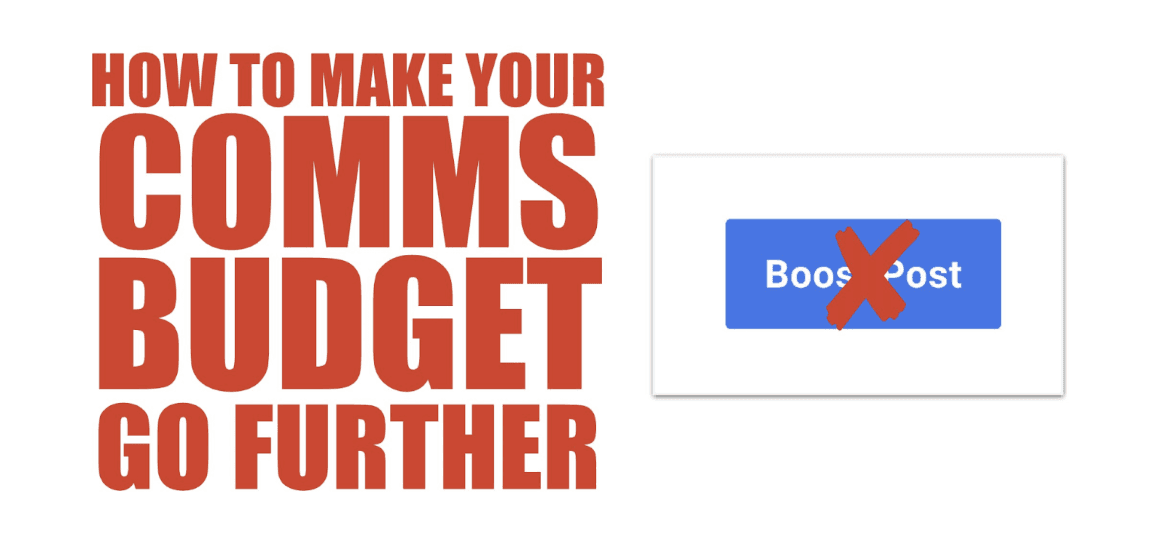
  • Boosting Without Strategy Is Wasted Money

    Boosting Without Strategy Is Wasted Money

    If you’re boosting your posts as an NGO, how do you know you’re getting the most possible impact for your money?


    Right now, a lot of places just click “boost” and they accept whatever numbers they get back – they think the only way to get more views is to spend more money.


    But it’s possible to do so much more to make sure your ideas are creating the impact they need to.


    For example, you can experiment with the way you present your ideas and you can experiment with the people you target.


    In an experiment we did with a human rights NGOs in MENA, we got 97% better engagement with the same message just by changing the way we said it.


    It’s not about changing the meaning of your message – it’s just about saying it in a way that connects with people more effectively.


    In another larger experiment, we got an average of 507% better organic engagement across 30+ posts from one month to the next.


    It doesn’t cost you anything extra and over time, these kinds of gains are what create the change that counts.

  • Too Many Projects. Too Little Impact

    Too Many Projects. Too Little Impact

    I worked in both the political and the NGO worlds. And everywhere I worked, almost everyone agreed that we should fund less projects and do them right, instead of funding so many projects that struggle to create the impact they need to.


    But somehow the system was unchangeable.


    The result is that there are hundreds of thousands of organisations that get a small amount of support; rarely enough to do really impactful work, but just enough to keep them ticking over.

    And that means that so many NGOs are forced to try to be all things to all donors; to mold their areas of focus for funding eligibility. It becomes impossible for them to specialise and get really good at creating actual social impact on whatever problem it is they’re supposed to be solving.

    An example I saw recently was a big grant for what could have been a really innovative project on disinformation. But instead of the money going to where it would actually create impact, it was used to plug funding gaps for struggling partners. The project was almost guaranteed to fail before it began.


    It comes down to strategy.


    The intentions are always really nice – that we can create the maximum amount of impact by supporting the maximum amount of projects.


    But funding could be used so much more effectively if we supported fewer projects, but ones that were underpinned by real data.


    That would take enormous courage to do. The chances of failure are bigger and more embarrassing.


    But right now, democracy and human rights are declining the whole world over.


    If we stopped being so busy and started being bolder, we’d be so much more effective in turning that around.

  • Disinformation Is Not Magic. It Is Digital Marketing

    Disinformation Is Not Magic. It Is Digital Marketing

    Here’s the thing about disinformation that almost no one knows. And it’s why the EU is powerless to solve it.


    Disinformation is just digital marketing.


    It’s the same techniques that Nike uses to sell you sneakers, except it’s selling ideas.


    Russia and China are competing for space in our minds the same way as brands do.

    They’ve figured out how to package their ideas in a way that works and so more and more people are switching “brand allegiance” from democracy to authoritarian, from balanced to paranoid.

    And again, it’s just digital marketing. They do really smart psycho social research on their target societies and that underpins their messaging. They come up with a bunch of hypotheses and lots of creative assets and then they use an experimental methodology to find out what works. It’s about throwing lot’s of stuff at the wall, seeing what sticks and then doubling down on that.


    They’re good at it. So it works.


    But the really important thing about this insight – that disinfo is just digital marketing – is that, until we know how it works, we’re powerless to stop it. We don’t even know how to begin, or what success would look like.

    So here’s the answer: success is about outperforming the disinfo in terms of traction. That’s measurable using big data. We can use the same smart psycho social techniques and the same experimental methodology and we can beat the disinfo in the marketplace of ideas.


    Say that to anyone who really knows their stuff in digital marketing and they’ll see the logic pretty much straight away. But getting governments and iNGOs to work like this is an uphill struggle.

  • Polarization Isn’t Just Algorithms. It’s Your Funding Model Too

    Polarization Isn’t Just Algorithms. It’s Your Funding Model Too

    After a decade working in NGOs and politics, I got a massive eye opener when I joined a media organisation and learned how to analyze data and how digital media distribution works.


    My huge takeaway is that almost the whole NGO community is accidentally making polarization worse.


    It’s a problem with targeting hardcore fans vs trying to spread ideas through wider society. Almost always, organizations choose to go after their fans.

    With almost every issue, from climate to refugees to trans rights, campaigning organisations try to keep getting good engagement from their most enthusiastic fans.

    Over time, the ideas they share get more and more hardcore and less and less accessible to anyone who’s not a fan already.

    The whole conversation gets dumber and more extreme. Agreement, consensus and solutions become impossible.

    But, if we rethink how we target – and try to spread our ideas instead of just keeping fans engaged – we can be an important part of reducing polarization and regrowing consensus.

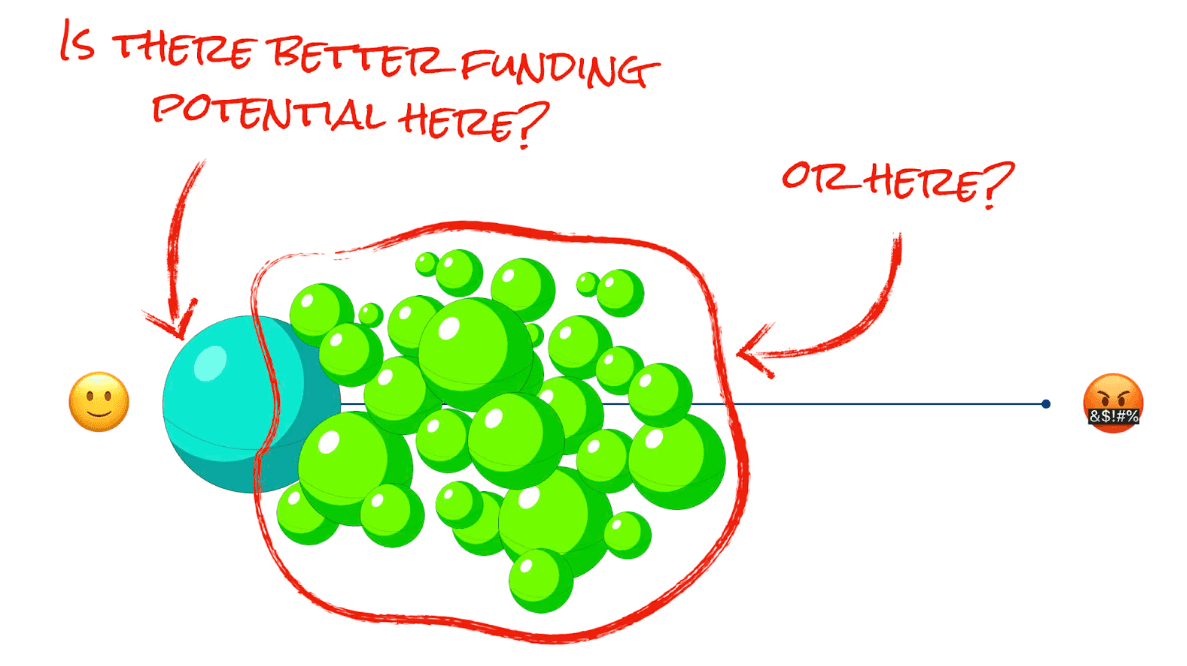
    The common objection to that, though, is that orgs such as Greenpeace have to cater to their own base to get funding.


    So here’s the really interesting question: is there more funding potential in the smaller niche of extreme fans or in the bigger but less extreme niche of people who agree with your values and are worried about their decline in society (but who have got more going on in their lives than politics or activism)?