Author: Dirk Kunze

  • Your Audience can be the Starting Line: Lessons from Brazilian Election

    Your Audience can be the Starting Line: Lessons from Brazilian Election

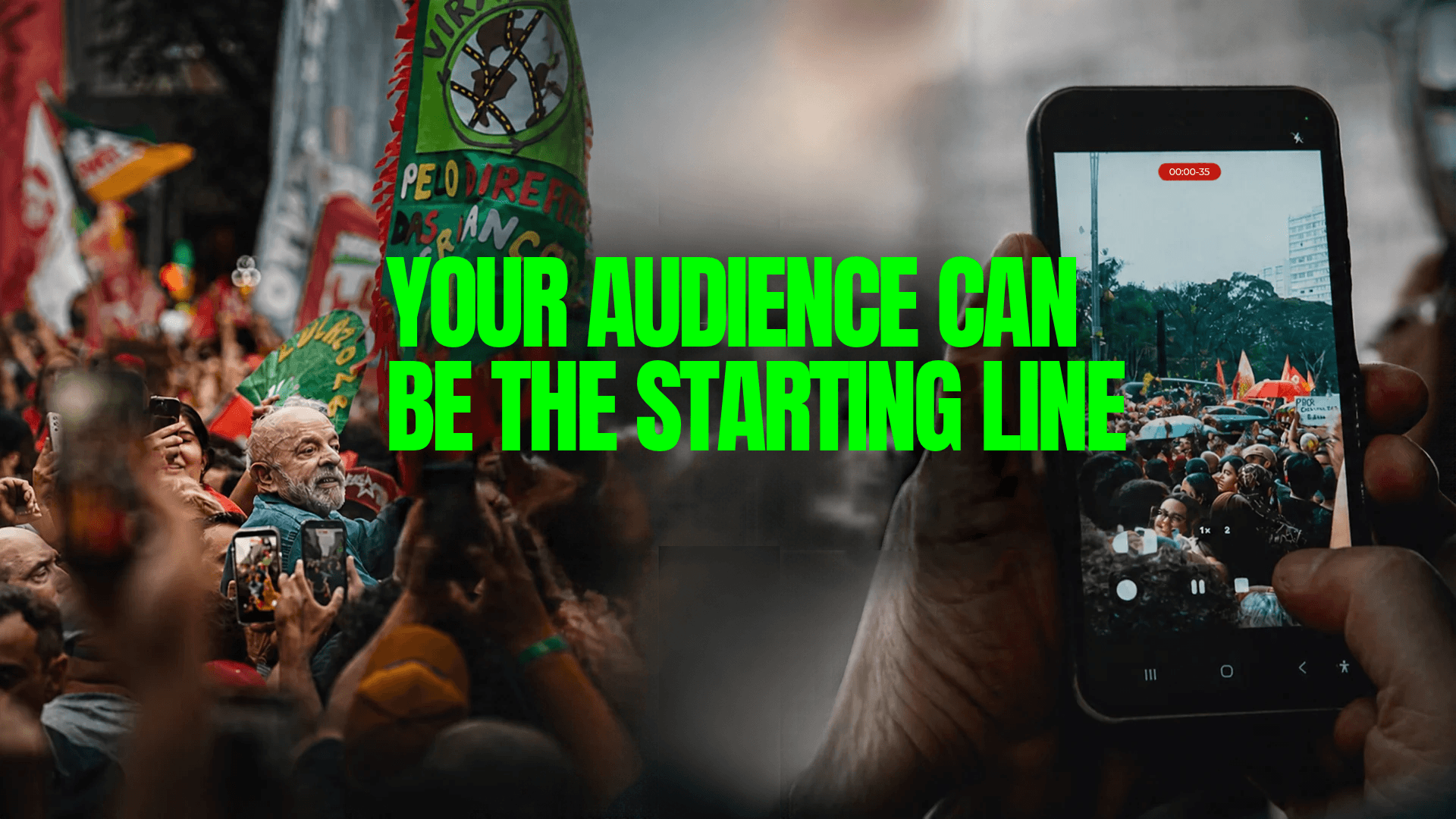
    In our last post, Strong Campaign Numbers Can Hide Who We Are Not Reaching, we argued that a campaign’s base was not the problem. The mistake was treating it as a destination rather than a channel and never checking how far a message can go. Brazil’s presidential election gave us the large-scale example of what treating a base as a channel can look like. In three weeks, millions of supporters went from receiving the campaign’s messages to carrying them into their own families, friends and communities. That is what it looks like when supporters are given a role. Most cause-driven organisations still measure digital communication as if the audience’s role ends with receiving something: Views. Likes. Shares. Perhaps a click. These numbers show how much attention a message captured, but they do not tell us whether anyone did anything with it.


    What Changed Between the Two Rounds


    Lula lost the first round and won the runoff three weeks later. A lot of other issues mattered in between including everyday issues such as cost of living, social programmes and higher turnout, and no single tactic won the election. But one change in the campaign’s communication stands out. A WhatsApp channel called “Lula’s Army,” run by André Janones, an allied congressman and influencer, grew from 50,000 subscribers on 5 October to more than ten million by election night. The size of the channel mattered less than what the campaign did with it. It identified the people it still needed to reach, adapted its communication to the platforms and relationships through which they could be reached, and gave supporters a role in turning attention into participation. Young communicators produced short, often funny videos for WhatsApp and Instagram, designed to travel beyond the existing base. The communication adapted to each platform, and the audience was not asked to like the campaign. They were asked to carry it.


    This was coordinated mobilisation. Lula’s Army distributed ready-made content and specific instructions. What matters for organisations is that supporters were not treated as passive recipients: they were given clear actions and carried the material into their own circles. As Gabriella Zutrau, senior advisor for digital strategy on Zohran Mamdani’s New York mayoral campaign, put it on our Political Communication Vienna panel: “Preach to the choir, because they will sing to the congregation.” What makes it work is that they sing in their own voice.


    A distributed network also makes communication less dependent on the reach of a single institutional account.


    What Organisations Can Do Now


    Give the audience a role

    Most cause-driven organisations will never have ten million people in a WhatsApp channel, and they do not need to. The same mechanism works with twenty volunteers, a partner network or a handful of creators. “Read this,” “watch this” and “share this” are not much of a participation strategy. The question is what role your audience is being given. Decide what people should be able to do after encountering the message: start a conversation, invite someone, add local context or help another person participate.


    Build for relationships, not only reach

    An institutional account can reach many people at once without earning their trust.Before launch, trusted voices such as creators, partners and staff need an argument rather than a script, so they can carry the core meaning in language that fits their own communities. This is how messages travel through trust: the argument stays intact while its framing adapts to different audiences.


    Make participation easy to carry

    Ultimately what matters is how easy it is for someone to pick up our content and use it.Break long reports or interviews into one-sentence arguments, evidence, short clips and a specific next action, such as starting a conversation with someone for whom the issue is relevant or testing the message with someone outside your team. If they can explain and adapt the core message without losing or distorting the meaning the message is more likely to travel.


    Measure the movement, not only the media

    Likes and shares show attention, not movement. Decide in advance what movement would look like: distinct links for partners or communities, a “how did you hear about us?” question at sign-up, participation from outside the existing base, or a count of actions completed. Attribution will never be perfect. The aim is to gather enough evidence to tell whether the message travelled and produced action.


    None of this can guarantee reach, trust takes time to build.But Brazil showed that the audience is not the end of the distribution chain. It can become the beginning when people are given a role.The useful question after a campaign is not only who it reached. It is who it enabled to carry the work further.
  • A Chronological Feed Could Leave the Biggest Voices in Charge

    A Chronological Feed Could Leave the Biggest Voices in Charge


    Australia wants social platforms to give users a persistent choice between a personalised feed and one showing only the accounts they follow. The appeal is users see what they choose to see, in the order it was posted, without an algorithm or a ranking system deciding for them. More control for users is a good thing. But a following-only feed also makes emerging causes, organizations or new ideas harder to discover, and that cost does not fall evenly.


    The Problem with Chronological Feeds


    Following-only feeds works with relationships that already exist. A feed built only from those relationships can show users more of what they already know, and has limited ways of introducing something new. While algorithm ranking has real problems, it is one of few mechanics that pushes an account, an idea or an emerging cause in front of people who have not chosen it yet. Without algorithms, the ways to new audiences depend largely on existing relationships and visibility: being shared by someone the user already knows or follows, being covered by the media or being known well enough to be searched for by name.


    Big Voices Have an Advantage


    These routes favor organisations that are already large. More followers means more people who might share a post. More recognition could mean more searches and more coverage. Visibility follows and builds on this. Chronological feed adds a second advantage to this, when posts are sorted by time, organisations that publish more often take up more of the timeline. Frequency might not be the only thing that matters, but it matters more than in a algorithm ranked feed. Big brands, elite publishing houses and legacy organizations can produce content constantly. Their follower base itself acts like a distribution channel. 


    Emerging causes depend more on discovery


    However an emerging cause starts from a different position. Unlike bigger organizations they cannot produce quality content constantly. Most of the people it needs have not even heard of it, and sometimes the idea itself is unfamiliar. Its potential audience sits almost entirely outside its current network, so its growth depends on reaching people who do not yet follow it aka emerging campaigns depend more on discovery. A same design change can affect two organizations types completely differently – in a chronological digital ecosystem, cause driven campaigns that require more discovery, loses more when discovery becomes harder. 


    Why this matters beyond individual campaigns?


    A cause that can reach only its existing supporters cannot build wider traction. And societies need credible ideas to travel between groups. When new ideas struggle to enter conversations, established voices populate attention and echo chambers become harder to escape. None of this means we should defend opaque algorithms. User choice matters. But control and discovery are different problems, and solving one does not solve the other.


    What organizations should look at now?


    If platforms offer fewer discovery pathways into newer audiences, “post more” should not be a strategy. Neither should focusing on the measurement of people who are already following or engaging. A more useful starting point is to look at how much of the current reach comes from non-followers, and which routes bring new people into the audience base such as: shares, recommendations, partner accounts, search or press coverage. Then identifying which of those most depend on the algorithmic distribution – those are the ones most exposed when follow-only feed becomes more common. Strong engagement in the existing base now could conceal the fact that the organization is reaching almost nobody new. 


    If discovery becomes scarcer, organizations that understand audience growth will have an advantage. The others will become increasingly efficient at talking to themselves.

  • X is Toxic. Leaving It is Still a Mistake.

    X is Toxic. Leaving It is Still a Mistake.


    Who Is Still on X and Why It Still Matters


    A growing number of cause-driven organisations are questioning their presence on X.


    That is not a small shift. For years, Twitter was one of the default places for NGOs, charities, journalists, campaigners and political organisations to be visible. It was where statements landed, media people watched, campaigns broke through and institutional voices tried to make themselves part of the public conversation.


    That world has changed.


    X has become more hostile, more polarised and more unpleasant. Many organisations now see it as misaligned with their values, unsafe for staff or simply less useful than it once was. For organisations working with refugees, survivors, minority communities or human rights defenders, leaving can be a real duty-of-care decision.


    So this is not an argument that X is fine.


    It is not fine.


    But there is a strategic problem hiding inside the moral clarity.


    Leaving a platform does not mean the platform stops shaping the debate. It only means your signal disappears from it.


    The sector is hovering near the exit


    The cause-driven sector has not really left X. It is hovering near the exit.


    A January 2026 Fundraise Up analysis reported that 73% of nonprofits were still active on X, while 31% of those still active said they planned to leave or sunset their presence. That is the perfect description of the current moment: morally uncomfortable, strategically undecided.


    And that is where the problem begins.


    Because the awkward thing about leaving X is that the people many organisations want to influence did not necessarily leave with them.


    Journalists still look there. Political staff still look there. Campaign people still look there. Elected officials still look there. Lobbyists, hostile actors and paid influencers definitely still look there.


    That does not mean X is healthy. It means X still has a function.


    X is not the town square anymore


    The old metaphor for Twitter was the public square.


    That is less and less useful.


    X is no longer where everyone gathers to have a shared civic conversation. If it ever was, that version is gone.


    A better metaphor is this: X is the corridor outside the committee room.


    It is not where everybody talks. It is where people close to power still pick up signals about what is becoming loud, risky, urgent or politically expensive to ignore.


    That is why the platform still matters.


    Not because it is pleasant. Not because it is representative. Not because it reflects public opinion in a clean way.


    It matters because influence does not only happen in public majorities. It also happens in elite attention streams, journalist feeds, political staff conversations and the spaces where people decide what deserves a response.


    If cause-driven organisations leave X and call that a strategy, they may not be resisting the influence system.


    They may simply be removing themselves from one of the places where the influence system still operates.


    The real question is not whether we like X


    The real question is not: do we like X?


    The real question is: what function does X still have?


    That distinction matters.


    From an Impact Engineering perspective, platforms are not moral identities. They are parts of an influence system. Each platform does a different job.


    TikTok may shape youth culture and short-form discovery.

    YouTube may build long-form trust and worldview.

    Podcasts may create intimacy and loyalty.

    LinkedIn may reach professional and institutional circles.

    WhatsApp may move messages through private networks.

    X still helps decide what becomes politically salient.

    That does not make it good. It makes it strategically relevant.


    Paid creator noise can become elite political signal


    A recent podcast conversation with Kyle Tharp, author of Chaotic Era, made this dynamic very clear.


    The right-wing paid influencer ecosystem does not use X only to persuade ordinary voters one by one. It uses X to push signals into the feeds of journalists, elected officials, campaign staff and strategists.


    That is a different kind of influence.


    It is not only about mass persuasion. It is about agenda pressure.


    If enough of the right people see the same issue, framed in the same emotional direction, at the same moment, it can start to look politically alive. It becomes something journalists notice, politicians react to and opponents have to answer.


    In other words: X is where paid creator noise can become elite political signal.


    The cause-driven sector often underestimates this.


    It still tends to think in terms of statements, campaigns and audiences that already agree. Hostile actors, lobbyists and political operators often think in terms of signal, pressure, timing and distribution.


    That is the gap.


    Absence is not a response strategy


    There are good reasons to leave X.


    Some organisations should leave. Some staff should not be expected to operate in a hostile environment. Some brands will decide that presence on the platform is no longer compatible with their responsibilities.


    But leaving is not the same as having an influence strategy.


    A public exit may say something about your values. It does not, by itself, change where power pays attention.


    And if the people you need to reach are still influenced by what happens on X, then the question does not disappear. It comes back in a harder form.


    Who is monitoring the narratives that start there?

    Who is reaching the journalists who still watch it?

    Who is responding when a false frame begins to travel?

    Who is working with credible messengers who understand the platform culture?

    Who is making sure public-interest ideas do not disappear from the spaces where relevance is manufactured?

    The answer does not have to be “post more on X.”

    For many organisations, that would be the wrong answer.

    The answer may be listening better. It may be using individual expert voices rather than institutional accounts. It may be working with creators. It may be building journalist-facing signal. It may be treating X as an intelligence layer, not a campaign home.

    But there needs to be an answer.


    Better infrastructure, not worse tactics


    The cause-driven sector should not copy the worst version of the paid creator ecosystem.

    No undisclosed payments.

    No copy-paste talking points.

    No fake grassroots energy.

    No synthetic outrage.

    Manipulation is not the model.


    But the answer to manipulation is not to leave the room and hope the room becomes less important.


    The answer is better infrastructure.

    Credible messengers. Clear values. Strong audience fit. Transparent partnerships where possible. Real measurement. No fake traction.

    The goal is not to become more cynical.

    The goal is to become more strategically awake.


    The point is not X. The point is influence.


    You do not have to like X.

    You do not have to trust it.

    You may not even need to be there through the old organisational account.


    But if journalists, political staff and hostile networks still use it to decide what matters, then ignoring it does not make you principled.


    It may just make you absent.


    And absence doesnt win the battle of ideas.


    The bigger lesson is not about X alone. It is about how cause-driven organisations think about distribution, attention and power.

    The platforms will keep changing. The audience map will keep moving. The next uncomfortable channel will arrive soon enough.


    The strategic question remains the same:


    Where are the people we need to reach, what shapes their attention and how do our ideas show up there without losing their integrity?


    That is the work.


    Not platform purity.


    Influence strategy.

  • When Organisations Become Their Own Target Audience

    When Organisations Become Their Own Target Audience


    Ferrari recently gave us a strangely useful lesson for the NGO sector.


    Yes, Ferrari.


    A recent piece in Inc. looked at the new Ferrari Luce EV and why it triggered such a strange reaction. The argument was not really about electric cars. It was about what happens when a brand forgets the feeling people came for.


    People do not buy Ferrari because they need transport. They buy Ferrari because of what the brand makes them feel: speed, danger, beauty, status, control, noise, mythology.


    So if Ferrari builds the future of Ferrari in a way that no longer feels like Ferrari, the issue is not just design. The problem is whether the people it needs still recognise themselves in what it is offering.


    And that is where this becomes useful for our world.


    Because in the NGO and aid sector, the same problem often shows up in a different form: organisations become fluent in their own internal logic and start mistaking that for public meaning.


    The mirror-image problem


    Ferrari risks building for a future audience while losing the feeling that made its core audience care.


    NGOs often do the opposite.


    They keep building for the people who already care, then wonder why everyone else is not coming with them.


    The language feels right. The values are correct. The internal audience nods. The board approves. The funder recognises the issue. The comms team has represented the organisation accurately.


    Then the content goes out into the world and does almost nothing beyond the circle that already agreed.


    That is not because the mission is wrong.

    It is because too many organisations have quietly become their own target audience.

    They ask: does this represent us?

    They should also ask: does this move the people we need to reach?

    Those are not the same question.


    The harder version of the same problem


    Halima Begum made a much harder version of this argument in The Guardian, writing that the “dinosaurs” of international aid must adapt or die.

    That line would be interesting from any sector critic. But it is much more interesting coming from someone who recently led one of the institutions at the centre of the debate.


    Begum is not writing as an outsider throwing stones at the aid sector. She recently led Oxfam GB, one of the large international NGOs implicated in exactly this debate. Her departure from Oxfam was itself contested and wrapped in questions of leadership, governance and institutional trust.


    So the point is not that one person had all the answers.


    The point is harsher: even organisations that know the right language can struggle when reform stops being a statement of values and starts touching power, structure and incentives.


    Large organisations are very good at saying they want to shift power, reach new audiences, serve people better and adapt to a changing world.


    They are often much less good at changing the internal logic that keeps them speaking to the same people, funding the same models and protecting the same centre of gravity.

    That pattern shows up in communications all the time.


    Internal approval is not public impact


    A lot of cause-driven communication is designed for internal legitimacy.


    It reassures the organisation that it has said the right thing. It reassures funders that the right themes are present. It reassures peers that the values are intact. It reassures supporters that they are still on the right side.


    All of that may matter.


    But none of it proves impact.


    The real question is whether the message reaches people outside the organisation’s natural base. Whether it connects with what they already feel and recognise as relevant. Whether it changes attention, receptivity or behaviour in the audience that actually matters.


    That is where many campaigns fail.

    They are built around what the organisation wants to express, not around what the audience needs to feel, understand or believe in order to move.


    This is the same basic mistake as the Ferrari problem, only in reverse.


    Ferrari can lose force by forgetting what its audience came for.


    NGOs can lose force by only remembering what their existing audience already believes.


    In both cases, the problem is the same: the organisation’s internal idea of itself starts replacing the audience’s lived experience.


    The audience that matters


    For cause-driven organisations, the hardest audience is rarely the core supporter.

    Core supporters already understand the language. They already recognise the issue. They already feel the moral urgency.


    The harder audience is the person who is not hostile, but not yet moved.


    The person who vaguely agrees, but does not act.


    The person who shares the underlying values, but does not see the organisation as relevant.


    The person who is busy with work, family, money, safety, status and the quiet pressure of everyday life.


    If communication does not connect with that reality, it will stay inside the circle of the already convinced.


    The goal is not to dilute the mission.

    The goal is to stop confusing internal approval with public impact.


    And that requires a different kind of evidence.


    Not “did our peers like it?”


    Not “did the report get published?”


    Not even “did the false narrative get detected?”


    But: did our response actually reach citizens, change receptivity and build resilience outside the circle that already agreed?


    From detection to response


    This is also where our work in the frame of the EU Narrative Observatory is heading.

    Over the past years, Europe has built serious capabilities in monitoring, fact-checking and threat analysis. That work matters. We need to know which narratives are spreading, where they are travelling and who is amplifying them.

    But detection is not response.


    The next frontier is real societal response capacity: one that can measure impact on citizens, test which interventions actually work and strengthen resilience across Member States.


    That means moving beyond the internal question of whether a message sounds right.


    It means asking whether it works.

    • Does it travel beyond the base?

    • Does it reach people who are not already convinced?

    • Does it reduce receptivity to harmful narratives?

    • Does it build trust, relevance or shared understanding in the places where those things are weakening?

    These are not rhetorical questions. They are measurable ones.


    And until cause-driven organisations start answering them, many will keep producing communication that satisfies the room it was approved in, but never reaches the world it was meant to change.


    That is the lesson from Ferrari.


    That is the challenge in Halima Begum’s critique.


    And that is the work ahead for any organisation serious about influence beyond its own reflection.


  • The Cambridge Analytica Lesson We Still Refuse to Learn

    The Cambridge Analytica Lesson We Still Refuse to Learn


    It has been almost ten years since Cambridge Analytica became the dark myth at the centre of Trump, Brexit and political microtargeting.


    But the lesson most people took from that scandal is still the wrong one.


    Yes, the data breach was real. Yes, the company was unethical. And yes, Cambridge Analytica helped clients win campaigns that changed the world.

    But the idea that it had built some secret psychological mind-control machine was always much shakier.

    That story was useful to them.


    “Stolen data” sounded impressive. “Psychographic profiling” sounded like science fiction. And to exactly the kind of clients Cambridge Analytica wanted to impress, it made the company look more powerful, more dangerous and more valuable than it probably was.


    Even the excellent reporting on Cambridge Analytica by Carole Cadwalladr in The Guardian never fully closed the gap between the stolen data and the electoral impact Cambridge Analytica claimed it could create.

    The reporting exposed a real scandal. But the public story that formed around it often gave the company’s own marketing more credit than it deserved.


    The reality was less mystical, much more important and it still matters today.


    The targeting was not magic


    The targeting Cambridge Analytica actually used was often pretty clunky.


    In a podcast interview, Matthew Oczkowski, Cambridge Analytica’s former Head of Product, described a much more familiar campaign logic: using available signals and proxies to identify likely audiences, test messages and improve performance over time.

    One example he gives is 4×4 ownership as a rough proxy for Republican values.


    Smart, yes. Useful, yes. Groundbreaking mind-control, no.


    That distinction matters because it changes what we should learn from the scandal.

    The real story is not that Cambridge Analytica hypnotised voters with stolen data. The real story is that they understood something many public-interest organisations still struggle to accept: campaign impact comes from research, testing, measurement and iteration.


    What Cambridge Analytica actually did


    What Cambridge Analytica actually did was data-driven strategy.


    They researched audiences to understand what resonated. They turned those insights into creative executions. They measured engagement. Then they iterated relentlessly to improve.

    Not once.

    Not for one audience.

    But again and again, across every segment where there was potential for cost-effective gain.


    That is not magic.


    It is marketing discipline.


    And this is still badly understood, especially on the pro-democratic side.

    Too often, data is treated as either suspicious or magical. Either it is seen as unethical manipulation, or it is treated as a black box that only hostile actors know how to use.

    Both views are wrong.


    The real leverage is not in stolen data.


    It is in learning faster than your opponents.

    • Which messages earn attention?

    • Which frames resonate outside the base?

    • Which creative versions travel?

    • Which audiences are actually reachable?

    • Which assumptions collapse the moment they meet the real world?


    These are measurable questions.


    And if the strategic thinking is sharp enough, if the organisation is honest enough to learn from the results and if the team is adaptable enough to keep improving, the advantage compounds.


    The wrong lesson


    The lesson from Cambridge Analytica was not that democracy was defeated by a magic database.


    It was that disciplined research, audience insight, creative testing and iteration can beat people who are still trying to win attention with one polished message and a good conscience.


    That should have been the real warning.


    Instead, too many constructive actors learned a different lesson: that data-driven campaigning is inherently dirty, that targeting is manipulation and that ethical organisations should keep their distance from the tools of modern influence.


    That mistake has been costly.


    Because hostile actors did not stop using these tools. Populists did not stop testing messages. Disinformation networks did not stop learning from engagement. Political operators did not stop finding out which frames travel and which audiences can be moved.


    They kept learning.


    Much of the public-interest sector kept publishing.


    That is the gap.


    Detection is not response


    This matters today because the disinformation field still spends too much energy on detection alone.

    Detection is necessary. We need to know which narratives are spreading, who is amplifying them and where they are travelling.


    But knowing which narratives are spreading is not the same as knowing what response actually reduces their traction, changes audience receptivity or builds resilience in the real world.

    A dashboard does not change minds.


    A fact-check does not automatically reach the people most vulnerable to the falsehood.


    A threat report does not tell us which counter-message will work, with whom and why.


    That is the next frontier.


    Over the past years, Europe has built significant capabilities in monitoring, fact-checking and threat analysis. The next step is to develop real societal response capacity: one that can measure impact on citizens, test which interventions actually work and strengthen democratic resilience across Member States.


    That is also where our work in the frame of the EU Narrative Observatory is heading.


    The question is no longer only: what harmful narratives are spreading?

    The harder question is: what actually works against them?


    That answer will not come from guesswork. It will come from audience research, message testing, targeting logic, creative iteration and impact measurement.


    In other words, from learning faster.

    That was the useful lesson hidden inside the Cambridge Analytica scandal.

    And it is still the lesson too many people refuse to learn.


  • The Election Nobody Is Watching

    The Election Nobody Is Watching


    One of the most important leadership races of this year will probably pass most people by.


    The United Nations will choose a new Secretary-General for 2027. The official process is already underway: candidates have been nominated, vision statements published and public dialogues held in New York. The four declared candidates so far are Michelle Bachelet, Rafael Grossi, Rebeca Grynspan and Macky Sall. Each has been asked to explain how they would lead the UN through reform, financial pressure, geopolitical conflict and declining trust.


    That is interesting, because the UN is facing a much bigger problem than only a performance problem. The UN has a legitimacy  problem.


    That distinction matters.

    A performance problem means people think you are not doing your job well enough. 

    A legitimacy problem means people no longer understand what your job is for.

    This is where communication becomes much more than PR.


    PR is often treated as the layer that comes after the real work: the press release, the social post, the campaign video, the polished statement. But for organisations that depend on public trust, communication is part of the work itself. It is how the work becomes visible, understandable and relevant.


    If people do not understand what you stand for, they will not stand with you.


    The UN race makes this unusually clear. The next Secretary-General will not be a world president. They cannot force powerful states to cooperate. They cannot fix every conflict or resolve every institutional failure. But they will become one of the most visible symbols of what the UN is, what it does and why it still matters.


    The race is still very open, with more potential candidates joining in later. But it was Rebeca Grynspan who herself made sure to outline that communication is not PR, but a part of the mission itself. Her point was simple: international organisations face a legitimacy crisis because many people no longer understand what these systems do for them and the UN needs to become more visible, more communicative, more agile and more able to explain itself to people beyond the diplomatic system.

    So far, she seems to be the one most explicitly naming the communication problem as a legitimacy problem. And that is the part every cause-driven organisation should pay attention to. Because this is not only a UN problem. It is the same mistake across the sector.


    And unfortunately many public institutions, NGOs and cause-driven organisations face both problems at the same time. They do work that they believe is important. They publish reports. They run programmes. They launch campaigns. They explain what they are doing in language that makes sense internally… but then they wonder why the people outside their existing circle are not paying attention.


    The problem is rarely that the public is stupid. The problem is usually that the organisation has failed to make itself meaningful to the people it needs to reach – people outside the already convinced!

    This is especially difficult for organisations built around social inclusion, rights, public interest and progressive ideas. They often assume that the moral value of the work should be obvious. It is not. Most people are busy. Their minds are full. They are thinking about jobs, rent, family, status, safety, the cost of living and whether their future still makes sense.


    If an organisation cannot connect its work to those lived concerns, the public simply moves on.


    That is the brutal part: You do not lose people only when they disagree with you. You lose them when they cannot see why you matter.


    Populists, extremists and hostile actors often understand the communication environment better. They do not wait for people to discover their ideas. They package them. They test them. They connect them to status, fear, belonging, anger, pride and hope. They speak to people’s lived concerns, even when the solutions they offer are false or destructive.


    Meanwhile, many cause-driven organisations keep explaining themselves to people who already agree with them.

    That is not a moral failure. It is a strategic one.

    Too many organisations still communicate as if importance creates attention. It does not.

    Too many still communicate as if values explain themselves. They do not.

    Too many still communicate as if better facts will automatically create trust. They rarely do.

    Too many still communicate as if the people they need to reach are already waiting to listen. They are not.


    Good ideas do not spread because they are good. They spread when they are made resonant, emotionally legible and easy for people to connect with. This is basic Impact Engineering:  a system that connects narrative monitoring, audience segmentation, message experimentation and traction measurement in a way that actually reaches beyond the base. 


    It’s  not about manipulating people. It’s about letting go of the  assumption that clarity inside the organisation equals relevance outside it.


    This is where so many progressive and socially inclusive organisations struggle most. Their ideas are often way better for way more people than the alternatives. But they are not always communicated in a way that connects with what people already feel, need and value.


    That leaves an open space for hostile actors.


    For the UN, that may determine whether people still understand why multilateral cooperation matters. For NGOs, foundations, public institutions and civic organisations, the same rule applies at a different scale.


    If people do not understand what you stand for, you have not just lost attention. You have lost influence.

  • Distribution Beats Argument: What Brands Teach Political Campaigns in 2026 (Originally published on “Partisan”)

    Distribution Beats Argument: What Brands Teach Political Campaigns in 2026 (Originally published on “Partisan”)


    If you want proof that distribution beats argument, you don’t need a theory. You have Baden-Württemberg: On 8th of March 2026 they have a state election. Polling is tight enough that “small shifts” are not a metaphor, they’re the election. A single memetic moment like the viral resurfacing of a candidates 2018 comment on “rehbraune Augen” (hazel eyes) can become a storyline because what travels gets rewarded. And an “old media” controversy (SWR “Triell”) shows broadcast still matters but the real fight is what happens after: clips, reactions, derivatives, distribution loops.


    Baden-Württemberg is the current live demo

    Baden-Württemberg’s 2026 state election race shows the new reality: tight margins, reduced targeting levers and platforms rewarding what travels. Brands handle this with a repeatable system: motivation-based segmentation, conversion funnels, rapid testing and owned channels. Campaigns that treat distribution as a capability outperform campaigns that treat it as publishing.

    What makes this campaign unusually useful as a case study is not some exotic local issue. It’s the operating environment. The EU political advertising transparency rules for political advertising are forcing drastic changes. The comfy habit of renting reach, microtargeting and optimizing your way out of mediocre creative just got kneecapped at the worst possible moment.

    Now add the second ingredient: the race is tight. Infratest dimap’s poll has CDU on 28% and Greens on 27%. In an election like that, “our supporters loved it” is not a KPI. It is a sedative. The margin is decided by people who don’t wake up thinking about politics, don’t want to pay the identity cost of joining a tribe and will scroll past anything that smells like a lecture.


    That’s where brands come in

    Brands don’t “do content.” They run a distribution system. They treat attention like an asset, not a sermon. They assume the audience owes them nothing. Politics often does the opposite: it publishes what it thinks is important, measures applause inside the bubble, then wonders why opponents with weaker arguments and stronger distribution keep winning.

    You can see the mechanics in real time in Baden-Württemberg. A news thread about the Greens catching up explicitly connects it to a travelling, memetic moment, the so-called “Rehaugen” video. It’s not that the video is profound. It’s that it travels. Platforms reward what travels. Campaigns that understand this build formats that earn attention first, then earn trust, then convert into action. Campaigns that don’t keep producing “important” messages in unpopular packaging and call the result “strategy.”


    So what do political teams steal from brands, without turning politics into a deodorant commercial?


    First: segmentation by motivation, not demographics

    Brands don’t build a growth plan around “men 18–34.” They build it around what people are trying to achieve, protect, avoid, prove. Political versions are simple and brutally practical: what the segment wants, what it fears, what it distrusts, what it feels embarrassed to admit. When the ad ecosystem tightens and organic distribution becomes your primary reach engine, those motivation maps become more valuable than ever because they tell you what an outsider will actually stop for.


    Second: funnel thinking instead of megaphone thinking

    Brands assume the audience moves in stages. Politics too often behaves like every post is a closing argument. In a tight race, that’s performance art. A campaign funnel starts with low identity cost attention, then credibility in the audience’s language, then a single frictionless conversion, then retention that makes supporters useful not just loud. Without that, you get high view counts and zero movement, the classic vanity metric trap.


    Third: disciplined experimentation as an operating model

    Brands do not hold meetings to predict winners. They test and let the market decide. European political teams used to compensate for weak organic systems with paid optimisation. When that crutch disappears, learning speed becomes the only advantage you can manufacture. This is where most campaigns fail because their internal process is designed for safety and approvals, not for learning. The fix is boring: weekly tests, few variables, a control creative, documented learnings, scale winners hard and kill losers fast.


    Fourth: creative as a system, not as a masterpiece

    The “Rehaugen” moment is useful because it demonstrates that distribution is format-driven. Brands scale by building a small set of repeatable formats they can ship fast and improve fast. Campaigns should do the same: a limited repertoire of formats that match platform behavior, each tied to a segment and a funnel stage, each measurable. That’s how you stop relying on one viral moment and start producing predictable reach.


    Fifth: proof, not claims

    Brands convert sceptics with specificity, constraints, and credible validators because trust is expensive. Political communications often ask for trust up front and substitute moral framing for proof. That works for the base and fails on everyone else. In a close election, proof is not a nice-to-have. It is the only thing that lowers the trust burden enough for an outsider to keep watching.


    Finally: owned channels as infrastructure

    Baden-Württemberg is the reminder that platforms change rules and regulators change incentives. If your campaign still treats Instagram or TikTok as “the channel,” you’re renting your core asset from a landlord that dislikes you. Brands build lists, opt-ins, and CRM discipline because they expect the rules to change. Political teams should act with the same basic survival instinct.


    Baden-Württemberg isn’t special. It’s the norm in digital reality. Tight margins plus reduced paid targeting puts a spotlight on the real game: whoever builds a repeatable traction system reaches beyond their base, learns faster than their opponents and converts attention into action. Everyone else publishes to themselves and calls it democracy.


    ——-

    This article was originally published on Partisan as an expert contribution by Dirk Kunze. If you want to read the original version in its first publication context, find it here: https://hub.partisan.community/m/news/distribution-beats-argument-what-brands-teach-political-campaigns-in-2026/9542270d-2b78-4609-ac4c-c5c4a80ae4ff

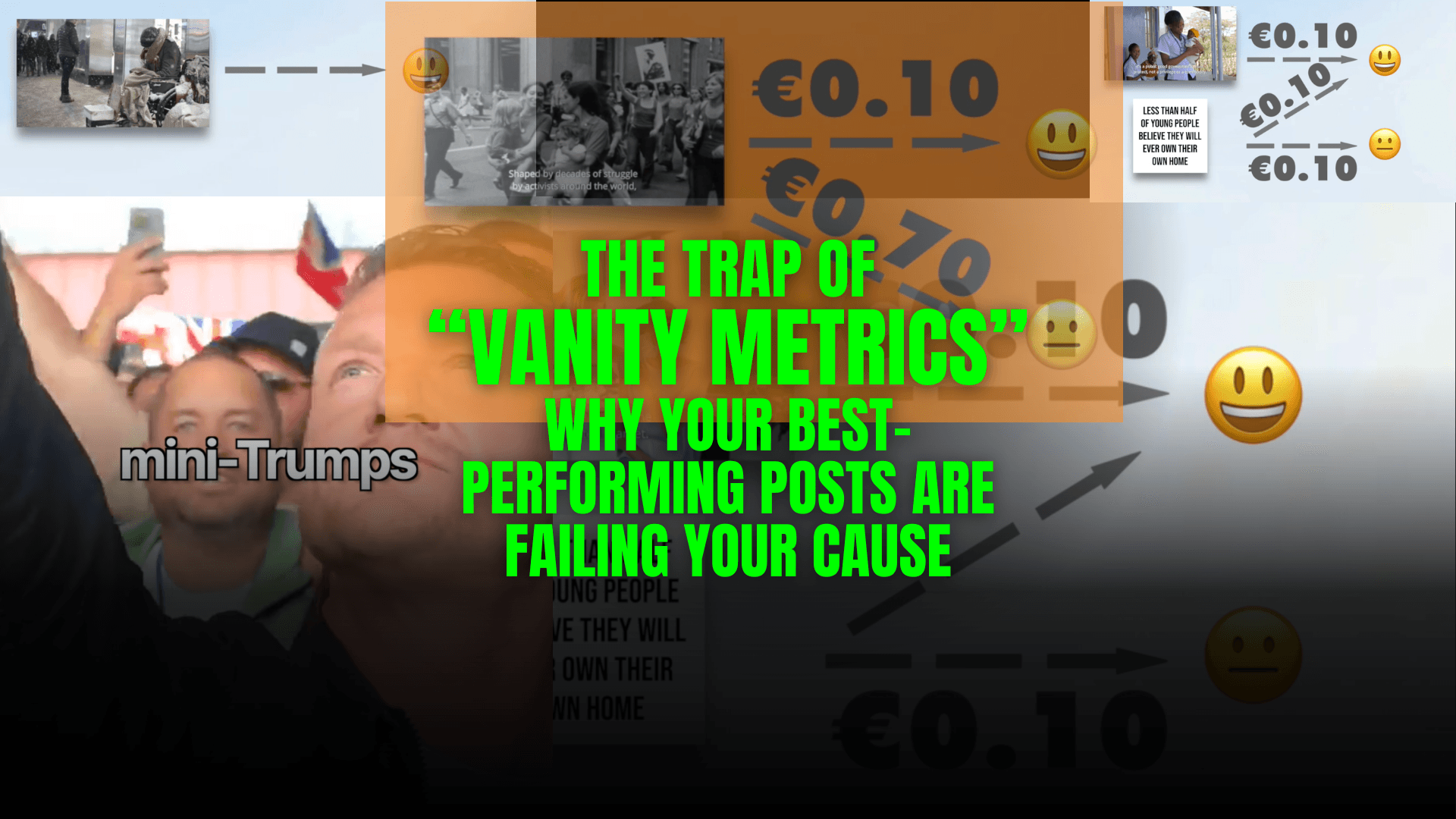
  • The “Vanity Metric” Trap: Why Your Best-Performing Posts Are Failing Your Cause

    The “Vanity Metric” Trap: Why Your Best-Performing Posts Are Failing Your Cause

    Trump is a compression test for every human weakness at once. But he is also a masterclass in what happens when attention becomes the only currency.

    While populists and digital-native disruptors have spent the last decade mastering the mechanics of the digital public square, civil society and “sane” politics have remained stuck in a cycle of “nutty confidence.” We believe that because we are right, we will win.

    The data tells a different story.


    The Echo Chamber Trap

    The uncomfortable truth is that the third sector is failing at communication. Not because the message is wrong, but because the distribution is broken. Social media platforms are designed to give brands the cheapest possible engagement. In the world of social impact, the cheapest engagement is echo chamber engagement. When you only talk to your fans, your message becomes more extreme, less accessible and ultimately, it fuels the very polarization we are trying to solve.

    Essentially it is shouting into a room full of people who already agree with, while the “persuadable mainstream” – the 80% of the population who actually determine the direction of society – is being fed a more “heroic,” better-feeling narrative by the opponents.


    Impact Engineering: From Vanity Metrics to Real Change

    In our latest case study with CESR (Center for Economic and Social Rights), we demonstrate how to move past vanity metrics—likes and shares from your core base—and focus on Impact Engineering.

    The formula is the absolute basics of data-driven media:

    1. Define Real Impact: What does success look like beyond “awareness”?

    2. Identify Challenges: What cultural or psychological barriers stop people from supporting your cause?

    3. Experiment & Iterate: Run parallel creative tests to see which values (empathy, pride, security) trigger traction.

    4. The Rinse & Repeat Loop: Analyze the data, kill what fails, and scale what works.


    Traction Beats Truth (If Truth Can’t Get Traction)

    We have to accept a hard reality: In the modern attention economy, facts don’t win—traction does. If a human rights narrative cannot compete for attention against a meme or a populist soundbite, it effectively doesn’t exist for the mainstream.

    Our work isn’t about “dumbing down” the issues. It’s about the UX of Information. It’s about making sure that sane, evidence-based politics feels as intuitive and engaging as a consumer brand.


    Watch the Case Study

    In the video below, we break down how we applied this methodology to help CESR reach audiences they never thought possible. We didn’t just reach more people; we reached the right people – the persuadable mainstream.


    The Bottom Line

    Civil society needs to stop lecturing and start listening to the data. We need to stop suffering from the Dunning-Kruger effect of thinking we “know digital” because we have a Facebook page.


    It’s time to close the gap. It’s time for Impact Engineering.


  • Disinfo is a Marketing problem

    Disinfo is a Marketing problem

    Everyone wants the truth, right?


    Well, people can base a whole political ideology on “next to NO info” if it makes them feel good… but if they spill a cup of coffee on a laptop, suddenly research seems like a good idea.


    This is why very little is working so far to solve the disinformation problem. Old media thinking fundamentally misunderstands the User Motivation and User Experience.


    Our motivations are complex. Sometimes we seek truth but more often than not, belonging or status or distraction become more important.


    People don’t open TikTok to be lectured. And many don’t see the relevance of spending energy learning a new skill like media literacy if it won’t help them get ahead in the endless grind of modern social competition.


    So here’s a new take on the “human layer” of the disinformation problem – it’s a pivot from pedagogy (teaching people how to think) to social currency (helping people belong):


    So, in order to compete for influence in the new digital reality, we need to do media that meshes with how people work in the real world. Sure, lifestyle influencers and a solid media mix across other formats has a price tag – but if we’re serious about solving the disinfo and polarisation crises, we need to get way beyond organic social (which only reaches people who ‘like’ you already).


    And there’s a precedent.


    Way back when the hot new media technologies were radio and TV, governments spent billions creating their own influence machines – the BBC, ARD, RAI, PBS, ETC…. and for a century they enjoyed a near monopoly on the information flow.


    Those influence machines aren’t totally obsolete. They just have a hundred million competitors now. The monopoly is gone and the competitors (including foreign governments and shady xenophobes) use smart behavioral science and data to win users over to them. So what we need is a healthy mix of old & new media!


    Doing this would actually be a huge boost to fact checking.


    Algorithms serve fact checks to people who already like facts.


    Our analysis of 10,000 comments across 10 fact checking orgs shows up to 80% political alignment with democratic values. That means: The people engaging with fact checks probably know the facts already, are the least vulnerable segments to disinfo and (to a significant extent) unconsciously use fact checks to meet their belonging needs.

    User Experience makes the internet go round. And good UX is simply about how well the content or design meets the User’s Motivation.


    So, increasing User Motivation among the apolitical majority would potentially give a huge boost to fact checking engagement with the segments that really count.


  • Democracy needs better branding

    Democracy needs better branding

    Branding is not your logo. It’s the shortcut in someone’s head

    The feed doesn’t reward good intentions. It rewards what people choose to engage with.

    That’s why the people that try to weaken social cohesion use media like a weapon: not to persuade everyone, but to build traction where it counts.

    Meanwhile, many institutions still struggle with the basics of new-media influence: they publish what they think is important, then measure success by cheap engagement from the people who already agree. The result is predictable: reach narrows, bubbles harden, the mainstream drifts away.

    Logiq Media exists to fix this with Impact Engineering: audience-first strategy, live message testing, targeting logic that doesn’t just feed the algorithm and traction metrics that show what actually travels beyond the base.

    Branding is where a lot of “serious” political communication quietly dies.


    What branding actually is

    Branding is not your logo. It’s not your color palette. It’s not your corporate values poster.

    A brand is the instant feeling people get when they see your name. The shortcut their brain takes before they decide whether to care.

    You already have a brand. The only question is whether it helps you or sabotages you.


    Why populists win here

    Populists aren’t powerful because they have better facts. They’re powerful because they build brands that match people’s current fears, hopes and identity needs. Their messaging feels like it “fits” the world their audience experiences.

    A lot of constructive actors do the opposite. They treat branding as suspicious, then write messaging by committee. Every internal stakeholder gets a sentence. Every risk gets padded. Every edge gets filed down.

    That’s how you end up with content that offends nobody and moves nobody.


    The fix

    Brand strength comes from disciplined repetition: one promise, in human language, repeated until it becomes the default association in people’s minds.

    Then you test. Not “which headline got more likes from our core fans” but which framing earns attention from persuadable mainstream audiences who don’t already live in your bubble.

    That’s the difference between communication as broadcasting and communication as an influence system.


  • Banning Political Ads Won’t Stop Disinformation. It Will Supercharge It

    Banning Political Ads Won’t Stop Disinformation. It Will Supercharge It

    Meta bans political ads starting in October. Google starts in September (see below) … The EU’s new rules on political advertising were meant to protect democracy. But instead, they’ve pulled the rug out from under the very actors trying to defend it.

    For cause-driven actors, that’s the end of a decade-long crutch: if you wanted to break out of your base, you could at least pay to reach the mainstream. That’s gone!


    Banning political ads: how to stay visible when the rules change

    Banning political ads sounds protective. It feels like a clean fix in a messy digital world. It also removes one of the last reliable tools civil actors used to reach people outside their base.

    Paid reach was never a magic trick. It was a bridge into mainstream feeds when organic distribution narrowed. Without that bridge, the gap between coordinated disinformation and public interest communication will grow.

    The reflex will be familiar. Teams will post more and push harder. Volume will rise while influence falls because the same people will keep seeing the same messages.

    This article offers a different path. It explains what changes when paid reach disappears and shows how to replace ad spend with a repeatable system for organic traction. The goal is simple. Reach persuadable mainstream audiences on purpose.


    What banning political ads really changes

    Bans do not erase manipulation. They shift the mechanics. When paid reach is gone, distribution defaults to what the feed already rewards and that is motivation alignment over moral intent.

    If your content attracts only people who agree, your bubble hardens. Opponents will keep growing by designing stories that feel close to daily life. They were already doing that with premium creative and disciplined testing.

    The loss of ads removes a safety valve. You no longer have an easy way to leave your circle. Organic traction must carry the load that budget used to share.


    Why bans will boost disinformation unless you adapt

    Disinformation teams treat this as a marketing problem. They run live experiments, learn fast and ship creative that fits how people want to feel. They rely on shareable formats and cultural cues that travel without brand follow.

    They also publish less and learn more. Because they iterate in public, their stories feel native to the feed and their frames move across identities. In that world a ban does not slow them down. It gives them more empty space.

    Civil actors can match this without copying the ethics. The mechanics are open to anyone who builds for them. The difference is not budget. It is design.


    The predictable but wrong response to banning political ads

    The obvious reaction is to post more. Teams will plan editorial marathons, call on partners and fill calendars. It creates busy dashboards and shrinking influence.

    Another trap is to rely on platform automation for organic targeting. The system will find people who already like you. That is efficient for comfort and fatal for growth.

    A third mistake is to retreat into explanation. Long threads feel responsible yet rarely travel. People decide with a felt gain first. Facts only land after a story makes sense in their world.


    How to win without paid reach

    The task is not to shout louder. It is to design content people want to carry. That means high creative craft, real audience insight and distribution built for persuadable groups that would never click follow on your page.

    Start with motivations instead of messages. Map what your missing audiences want to protect or improve in the next month. Safety for family, dignity at work and a believable path to progress are durable anchors.

    Translate policy into near term gains. Say what improves and show the first two steps. Keep the promise constant and change the voice, identity and opening line to test entry points.


    Banning political ads forces better packaging and placement

    Packaging is not spin. It is translation that turns values into benefits people can feel. Lead with the gain, then add the proof, then make the next step easy.

    Placement needs the same discipline. Place content where your target already spends time and with voices they already trust. Borrow credibility through creators and communities that bridge identity gaps.

    Sequence content so each piece earns the next click. A three step journey from curiosity to small commitment beats a single heroic post. Familiarity grows reach.


    Logiq Insight: a traction system that works without ads

    At Logiq Media we replace ad dependency with a system that builds organic traction by design. We align audience mapping, creative experimentation and measurement into one weekly loop.

    Impact Engineering is the operating method for that loop. It starts by defining the maximum optimal audiences you could move next. It designs persuasion paths for their motivation and habits. It then tests in the live environment until the frames feel native and scale across lookalike groups.

    The outcome is more relevance with people who do not follow you. The proof is narrative lift and cost per meaningful engagement among those audiences. The system travels across teams and partners because playbooks make wins repeatable.


    A 30 day plan to adapt to the ban

    • Week one. Audit your reach. Identify the shares and saves that came from non followers in the last quarter and name the posts that did it. Interview five people in your missing segments to hear the language they use for their hopes and worries.

    • Week two. Draft ten variants of one core promise that links your mission to a near gain. Write one as a neighbor, one as a parent and one as a co worker. Produce three creative versions for each variant that change only the hook or the call to action.

    • Week three. Test the set with small budgets only to seed initial views and to control who sees it. Exclude followers so you read true expansion. Track intent and quality engagement in the defined segments and keep a clean control to avoid false positives.

    • Week four. Kill losers and scale winners into lookalike audiences that share the same motivation. Document the words, visuals, placements and timings in a simple playbook. Share it with partners so effects compound across networks.

    • Lock in a weekly cadence. Each week gets one learning question, two to three controlled tests and one decision on what to scale. This routine replaces guesswork with proof.


    Creative craft that earns organic distribution

    Use language that sounds like people talk. Swap abstract nouns for concrete scenes. Show the benefit in the first line and keep the ask light.

    Design for low friction actions that signal intent. Saves and shares from non followers are stronger signals than likes. Structure posts so the key line can travel as a quote or a caption.

    Use culture with care. Humor lowers guard and pride strengthens identity. Both work when they are used in service of truth and respect for the audience.


    Targeting, platforms will not do it for you

    Do not let automated systems overfit to your base. Build targeting logic that reaches people who are not fans and not hostile. Define those slices by life stage, media habits and motivation.

    Place content in contexts that lend trust. Local pages, community leaders and niche creators often beat institutional pages. You are after resonance across identity bridges.

    Avoid the temptation to chase everyone at once. Move one persuadable slice at a time. Expansion is the goal and focus is the method.


    Metrics that prove you can grow without ads

    Measure expansion, not noise. Report growth in quality engagement among people who did not follow you last week. Track cost per meaningful engagement in those groups even when the cost is time, not spend.

    Add narrative lift where it matters. If your frame gains share versus competitors in a defined slice, you have momentum that paid reach used to buy. Keep holdout groups so you can trust the signal.

    Publish your learning. Short playbooks help partners repeat what works and stop what does not. A field that learns in public moves faster than any single team.


    Takeaway

    Banning political ads will not stop manipulation. It will punish teams that relied on spend to leave the bubble and reward teams that can earn attention with design and craft. Your answer is a traction system that maps who is missing, translates value into near gains and proves movement with new people each week.


    Impact Engineering gives you that system. Use it to replace ad dependency with evidence based growth. One question to close your next content meeting. Which audience that does not follow us did we move this week and what single change made the difference.

  • Apple just ruined someone’s week…

    Apple just ruined someone’s week…

    Do you believe AI is getting smarter by the day? Nope!

    Apple researchers quietly delivered one of the most humbling take-downs of the latest wave of so-called “thinking” AI systems.https://machinelearning.apple.com/research/illusion-of-thinking

    Advanced models often look like they think while failing at harder problems. They do not reason better under pressure, they perform a ritual of reasoning that breaks when tasks get complex.

    That finding has a mirror in our sector. Many campaigns look intelligent yet do not move anyone new. We confuse the appearance of thought with public traction.

    The lesson is not about AI alone. It is about strategy. Performance without outcomes is an illusion, whether it is a chatbot or a civic program.


    What the AI illusion of thinking exposes

    The Apple paper shows that models simulate thought rather than build it. When tasks get harder they explain more yet solve less. They sometimes stop trying at all.

    That pattern is familiar. We have reports that explain everything except how they will work in the world. We have plans with steps and stakeholders that still do not shift behavior.

    In both cases the surface is credible. The outcome is not. That is the gap we must close.


    The civil sector’s illusion of thinking

    The cause-driven sector has its own chain of thought rituals. They have labels like stakeholder alignment, theory of change and awareness raising. These tools can help, but they often become a performance of intelligence that stands in for impact.

    We then measure the ritual. Page views, signatures and panels replace meaningful movement among the people who decide outcomes. The chart looks busy while the center of gravity does not move.

    This is not a moral failure. It is a systems issue. We designed for process and forgot to design for persuasion under pressure.


    Why performance is not traction

    A smart sounding campaign does not guarantee relevance. People follow what meets their motivation, not our internal logic. The feed rewards what connects, not what is correct in theory.

    Opponents understand this and package clear gains in simple language. They use formats people want to share and identities people want to join. That is why their narratives travel.

    Civil Society often recoil at the word “packaging”. They assume that good ideas sell themselves and that selling cheapens them. The data says otherwise. If the messaging does not work it will never fly.


    From performance to outcomes in 30 days

    • Start by writing the outcome in public terms. Define the audience you must move and the change you want to see in their behavior. Keep it testable and close to daily life.

    • Replace abstract nouns with visible benefits. Say what improves for a person within a month, not a policy cycle. Tie the benefit to a simple next step that feels doable now.

    • Draft three ways to express the same promise. Write one version as a neighbor, one as a parent, one as a co worker. Keep the promise constant so you can compare reception across tones.

    • Produce small creative variants for each version. Swap only the opening line or the call to action. Small edits isolate the element that drives response.

    • Test in the live environment with modest budgets. Exclude your current followers to measure true expansion. Judge success by intent and quality engagement among people outside your base.

    • Close the week with a decision. Kill what fails and scale what works. Publish a short note on the win so partners can repeat it.


    What the AI illusion of thinking teaches about measurement

    Measure outcomes, not rituals. A model that explains its thinking without answers is still wrong. A campaign that explains its logic without movement is still failing.

    Track expansion into new audiences. Report narrative lift among the people who did not follow you last week. Use a clean control to protect against false positives.

    Treat earned media and expert citations as training data for the public arena. They are not vanity signals. They are inputs that help your message be seen, quoted and trusted when people look for answers.


    Logiq Insight: Impact Engineering that holds up under pressure

    At Logiq Media we treat persuasion as an engineering problem. We align audience design, creative experimentation and traction metrics into one loop that ships, learns and adjusts each week. The loop replaces assumptions with outcomes.

    Impact Engineering turns packaging into translation that people recognize as relevant to their lives. It builds persuasion paths, runs tests in real conditions and proves lift with the metrics that matter. This is how better ideas compete without shouting.

    The point is not to copy opponents. It is to copy the system behind success. Audience first strategy, live testing and traction metrics beat impressive decks every time.


    Craft that earns distribution

    Lead with the gain, then offer the path. People will accept complexity after they feel a near term win. Clarity earns attention. Familiarity earns trust.

    Use language that sounds like people talk. Replace jargon with everyday words. Use cultural cues that carry meaning without extra explanation.

    Sequence the journey from curiosity to small commitment in a few steps. Let one piece of content earn the next click. Design for recognition over time rather than epiphany in one hit.


    Guardrails that keep integrity intact

    Hold the meaning steady while you test the wrapper. The core idea should not move even as phrasing evolves. That is how you avoid manipulation and keep faith with your mission.

    Avoid lecture tone. No one opens an app looking for homework. Respect attention and you will get more of it.

    Document what you will not do. Be explicit about honesty, consent and respect. Constraints help teams move faster with confidence.


    Leaders and funders can kill the illusion

    Leaders should reward proof of traction, not decks that perform intelligence. Ask for expansion metrics and for narrative lift in the audiences that decide outcomes. Fund fewer projects and scale the ones that move new people.

    Funders can change incentives with a sentence. Ask grantees to report how many people outside their base they moved this month and what made the difference. That question ends the ritual and begins the work.

    When partners publish their playbooks, effects compound. A field learns faster than any single team. That is how we regain relevance.


    The deeper parallel and why it matters

    Apple’s warning is simple. Intelligence is not what it looks like on the surface. Real problem solving shows up in outcomes, not in the performance of thinking.

    Civil society needs the same humility. Real influence does not come from how well we explain. It comes from how well we connect beyond our circle.

    If shouting harder worked we would have won already. In an algorithmic world, only measurable traction with the right people expands influence. That is the shift we must lead.


    Takeaway

    The AI illusion of thinking proves that performance is not impact. Escape the same trap by packaging true gains in language people live with, testing in the wild and scaling what moves new audiences. Impact Engineering gives you the system to do it with speed and integrity. What would change if every report ended with proof of expansion into people who never followed you before.

  • AI decides what people see?

    AI decides what people see?

    Everyone who saw the latest Google I/O ’25 knows, that we are no longer shown search results. We will see answers. That’s the quiet revolution Sundar Pichai confirmed in his keynote: Search is becoming generative. Instead of a list of links, we all get Google’s own summary from across the web. It decides what’s worth knowing. 

    If your organisation isn’t part of what the AI sees, you’re not part of what the public sees either. You can post more and still vanish. The gap is structural, not only creative.

    This article shows what to change now. It explains why machine readability and proof signals matter. It gives a plan that any civic team can run this quarter.


    AI decides what people see: the new visibility game

    Generative systems summarize the field and pick the next action. They surface sources that feel reliable to a machine, then present a confident path to the user. They prefer structure, clarity and corroboration over style.

    The implication is simple. Your best work must be discoverable as evidence, not only as prose. Presence in the answer starts with what the model can parse and verify.

    Think of visibility in two layers. The first is machine facing structure that lets an agent understand your claim. The second is human facing substance that people want to share and trust.


    Why most NGO content is invisible to AI

    Most mission content was written for clicks and shares. It was not designed as structured data that connects claims to sources and entities. Models struggle to extract a clear, verifiable answer from that format.

    The language often centers internal frames. It assumes brand familiarity and asks the reader to do extra work. Assistants punish friction because they try to resolve intent fast.

    Many sites also bury authorship and expertise. They hide dates and use vague titles. Systems that value recency and authority cannot reward what they cannot see.

    The result is a silent penalty. Your ideas exist, but the answer layer does not trust them enough to feature them. That is a strategy flaw, not a fate.


    From content to data that machines can trust

    Treat every page as a data object. Name the claim, name the source, name the person who stands behind it. Use a consistent template so a model can find each element in the same place.

    Use clear headings and tight summaries. Put the key statement near the top, then support it with short sections that map to common questions. Agents scan for structure far more than for rhetoric.

    Add factual anchors that can be crawled. Dates, locations and explicit definitions reduce ambiguity. Link to primary evidence and to respected third parties who echo your findings.

    Mark up people, places and organizations with schema that engines read. Identify authors, topics and page type. You are not gaming a system. You are describing your work in a format the system understands.


    Signals that raise trust in the answer layer

    Trust is a pattern. Machines infer it from surrounding signals as much as from what is on your page. You need a footprint that says you are reliable to both humans and models.

    Make authorship visible. Show real names and relevant expertise. Connect profiles to pages so identity is machine readable and consistent.

    Show your review process. If a page was fact checked, say so in a standard spot. If an expert contributed, state the name and role.

    Cite high quality sources and earn citations back. Your work should sit inside a web of references that the model already trusts. Over time that network lifts your default credibility.

    Keep pages fresh. Add a visible update note when you revise facts or guidance. Stale pages degrade trust even when the prose still feels fine.


    Distribution still matters in an AI first web

    AI does not float in a vacuum. It watches what people open, save and share. It notices which explanations reduce follow up queries.

    Invest in engagement that signals usefulness, not just sentiment. Saves and deep reads carry more weight than quick likes. Threads that resolve confusion tend to surface more.

    Be present where the questions start. Forums, creator channels and local pages feed the same discovery graph that assistants read. Participation seeds both human awareness and machine memory.

    Do not abandon classic channels. Email, podcasts and events still shape what the web cites. Those citations still shape what the answer presents.


    Logiq Insight: build an AI layer for traction, not vanity

    Most teams still ship pages for people and hope machines will cope. We reverse the order without losing the human. We design pages that a model can parse and a person can love.

    At Logiq Media we align audience design, machine readability and distribution into one loop. We call the loop audience, asset, answer. Audience defines the question, asset encodes the proof, answer measures if we surfaced in the places that matter.

    Impact Engineering is the operating method behind that loop. It replaces guesswork with weekly experiments that test which framing earns saves and which structure earns inclusion in AI answers. It keeps the focus on movement among people outside your base.

    The point is not to chase every tweak. It is to institutionalize a way of working that produces content as data and proof. That is how better ideas show up where the public now decides.


    A 30 day plan to get AI ready

    • Week one, audit structure. Pick your ten most important pages. Add clear summaries, explicit claims and visible authors. Mark up people, organizations and pages with standard schema.

    • Week two, audit proof. Add citations to primary evidence and to respected outlets that echo your findings. Link outward with care and invite credible partners to link back to the exact pages you want assistants to surface.

    • Week three, rewrite for questions. Collect the top questions your missing audience actually asks. Rewrite the same ten pages so each section resolves one question in clean language.

    • Week four, distribute with purpose. Seed those pages inside communities where those questions appear. Pair each page with two short formats that drive saves, replies and time on page.

    • Lock the loop. Each month, retire a weak page and promote a strong one. Each week, test one element that affects machine readability or human usefulness.


    Craft that earns both inclusion and attention

    Lead with the answer, then earn the read. Assistants quote what is concise, specific and verifiable. People stay for what is vivid and useful.

    Use concrete language. Replace abstract nouns with scenes and numbers. State what happens in a time frame a person can feel.

    Design templates that reduce friction. Predictable placement of key elements helps both agents and readers. Consistency beats cleverness when scale matters.


    Targeting when platforms will not do it for you

    Platform automation will overfit to your current audience. You must define the missing audience and build for it on purpose. Life stage, media habits and motivation are the anchors.

    Find where their questions live and show up there first. Package your answer to match the context while keeping the claim and proof intact. Borrow trust from credible hosts.

    Move one slice at a time. Expansion is a sequence, not a blast. Prove lift in one group, then clone the path for a neighbor group.


    Metrics that prove visibility and influence

    Track inclusion in AI answers for your core queries. Use simple prompts that mirror real questions and log where your pages appear. You do not need perfect data to see a trend.

    Track expansion among people who did not follow you last week. Saves, deep reads and shares from non followers are the strongest signals that you are leaving the bubble.

    Track narrative lift at issue level. When your frame gains share against competitors in a defined slice, your AI and human strategies are working together.

    Publish what you learn. A short playbook helps partners repeat wins and stop what fails. A field that shares evidence compounds reach.


    Governance that keeps integrity intact

    Do not trade accuracy for inclusion. Sequence truth for comprehension, but never bend it. Your process is a trust asset, not a burden.

    Write down what you will not do. No fake authors, no bought citations, no hidden edits. Constraints let teams move faster with confidence.

    Review pages on a regular cadence. Facts change, and assistants notice. Freshness is a fairness to the reader and a signal to the machine.


    Takeaway

    AI decides what people see, so you must decide what AI can see from you. Design content as data and proof, then distribute it where real questions begin. Use Impact Engineering to turn this into a weekly habit that grows visibility with people outside your base.


    One question to close your next content meeting. Which single page will we make machine readable, socially useful and present in real answers before the month ends.

  • Aesthetic Warfare and how we fight it

    Aesthetic Warfare and how we fight it

    On April 28, Donald Trump issued a new executive order. On paper, it’s about “protecting citizens” and “supporting law enforcement.” In practice, it sets the stage for deploying military assets inside the United States – against its own population. The order instructs his Justice and Defense Departments to mobilise resources, training and personnel to assist local police forces. It blurs the line between external defence and domestic control, cloaking militarisation in the language of law and order.

    And here’s what makes it especially dangerous: it sounds good in a headline. That’s the real genius – or menace – of modern populists. They’re not just authoritarian-leaning politicians. They’re masters of virality. They distill power grabs into shareable slogans, shrouding constitutional violations in emotionally satisfying narratives. While traditional institutions still rely on nuance, context and process, populists offer dopamine hits: fast, loud and one-sided. 

    The new struggle is not only about policy. It is about aesthetic warfare. Attention has become the primary arena where power is won or lost.

    You can see it in the way strongman stories are staged. Symbols, uniforms and soundbites do more than decorate a message. They become the message.


    What aesthetic warfare looks like now

    The above mentioned new executive order blurred the line between external defense and domestic control. It wrapped militarization in the language of safety and law. That is not only governance. It is a performance of strength aimed at the public eye.

    The same script plays out beyond the legal sphere. Loyalty is framed as virtue. Dissent is cast as danger. When institutions are reshaped around that logic, optics become the tool and obedience the goal.

    This is aesthetic warfare in practice. The surface is crafted to move emotions first. Facts follow, if at all.


    Why virality beats process

    Democracy rarely rewards spectacle. It is slow. It asks for patience and compromise. It seldom gives decisive wins in a news cycle. Populists exploit that gap by making speed and certainty feel like solutions that cannot wait.

    When the public grows bored or frustrated, simple narratives beat complex reforms. The performance of strength fills the vacuum that due process leaves open. It turns a policy fight into a contest of vibes.

    This is not new, but digital systems supercharge it. Algorithms amplify clarity, confidence and repetition. Nuance gets filtered out. Emotional hooks survive.


    How civil society lost the mainstream

    Too often the civic sector treats digital media like a megaphone. It publishes what it believes matters and waits for attention to arrive. That is not how attention works now.

    If your content engages the already convinced, you build a bubble, not public traction. You gain likes without influence. You raise awareness without movement. Over time, the mainstream hears less from you and more from the actors who design for reach beyond their base.

    The cost is real. When civil society stops shaping the story, it stops shaping outcomes. That is the deeper threat. Not only the opponent with a plan, but a public square where our ideas no longer travel.


    Aesthetic warfare is a systems problem

    Aesthetic warfare thrives because it is system aware. It is built for the incentives of the attention economy. It packages a vision that feels immediate, then feeds it through channels that reward heat over depth.

    Civil society often fights it as a content problem. More posts. More facts. More urgency. The impulse is understandable but it misses the mechanism. What beats a system is a better system.

    So the task is not to shout louder. It is to engineer messages that people want to carry. It is to move beyond right ideas toward ideas with momentum.


    Logiq Insight: Build a traction system

    Start with the audience you need, not the followers you have. Map persuadable segments by motivation and identity. Write hypotheses you can test in live environments. Track signals that show movement beyond your base.

    Design packaging to match how people actually decide. Use simple frames that honor real concerns. Pair relief with agency. Replace lectures with invites. Use humor where it lowers guard. Use pride where it strengthens identity.

    Treat each piece as an experiment, not a statement. Run variants across platforms. Learn which tone connects and which format travels. Then scale the winning version into a repeatable flow.


    What Impact Engineering changes

    Impact Engineering turns this approach into a discipline. It hardwires audience first design, live message testing and traction metrics into your work. It transforms creative guesswork into evidence you can repeat.

    It reorganizes effort around the journeys that convert a passerby into a participant. It builds persuasion paths that feel natural rather than forced. It measures narrative lift with the same rigor that tech teams measure growth.

    Most of all, it gives leaders the confidence to back what works. Not because a committee liked it. Because the data shows the idea moved people where it matters.


    Aesthetic warfare needs a counter aesthetic

    You do not fight a staged performance with a white paper. You counter it with stories that make people feel seen and safe. You give them believable wins and clear next steps. You match speed with cadence, not with panic.

    That does not mean mimicry. It means learning from the mechanics. Use culture as the doorway into serious fights. Use clarity without false certainty. Use emotion without manipulation.

    The goal is not to game the feed. The goal is to restore a shared center where better ideas can land.


    Metrics that matter

    If your dashboard is built on impressions and vanity engagement, it will lie to you. Success looks like reach into new segments, growth in message acceptance and an increase in supportive action over time.

    Define the audiences that move your mission. Set targets for penetration into those groups. Measure the resonance of your frames with them. Track repeat exposure and the actions that follow.

    Report what you can prove. Influence is not a feeling. It is a pattern that shows up in behavior.


    From message to momentum

    A message becomes momentum when people retell it in their own voice. That is when an idea leaves your channel and lives in theirs. That is when attention compounds.

    To reach that point, remove friction. Keep sentences clean. Give visuals that carry the point without text. Make the ask feel small and the identity feel big.

    Then build rituals that keep the story alive. Weekly drops. Community spotlights. Creator partnerships that borrow trust and lend reach.


    Guardrails for truth

    Aesthetic warfare often trades truth for effect. Our work cannot do that. The answer is not to soften facts. It is to sequence them. Lead with what people feel. Follow with what they can verify. Close with what they can do.

    When critics cry propaganda, show the process. Show the tests you ran. Show the audience learning you used. Show the outcomes you measure. Openness is a strategic asset.

    Integrity plus craft is not a compromise. It is how trust becomes competitive again.


    Leadership for the attention era

    Leaders need to sponsor experimentation. Protect teams that test and learn. Celebrate wins that show real traction, not just viral spikes. Fund fewer projects and back the ones with proof.

    Change incentives inside your organization. Reward reach into the missing middle. Tie budgets to audience movement, not content volume. Train partners on the same playbook so the system scales.

    The message is simple. Influence is a product of design, not hope.


    The bottom line

    Aesthetic warfare will not fade. It is the logic of the current media system. The answer is to compete on design, speed and resonance while holding the line on truth.

    Civil society can do this. It has the better story. It needs the better system to carry it. That is the work in front of us.


    Takeaway: Do not fight the spectacle with more statements. Build a traction system that earns attention from the mainstream and turns truth into momentum. If you changed one process this quarter, would it be your content plan or your system for learning what actually moves people?

  • Populists win because the Civil Sector is still unprepared

    Populists win because the Civil Sector is still unprepared

    When you look at the first round of the Romanian presidential election, you don’t need to squint to see the future.

    Populists win even when rules and watchdogs try to hold the line. It was not only foreign interference. It was message resonance with frustrated mainstream voters.

    Many observers reduced the story to bots and illicit cash. That is a mistake that blurs the real lesson. The winning force was attention shaped by relevance, not budgets alone.


    What Romania revealed about why populists win

    Romania was not an edge case. It was a test of how modern influence works in a feed driven public square. The campaign that surged mastered attention by matching how people felt and what they hoped could change soon.

    The first round result was later nullified by the establishment. Yet the pattern remained. The side that met motivation with a believable future took ground in the center.


    Why populists win is not mainly about money

    There was serious evidence of illicit support and outside manipulation. That deserves scrutiny. Still, if the message does not work it does not fly, no matter the spend.

    Populist frames travel because they fit how people decide in a noisy environment. They offer a clear gain, a near path, and a promise that feels personal. When that happens, algorithms only scale what is already resonant.


    Why populists win with frustrated mainstream voters

    The target was not the loud fringe. It was the large group who feel overlooked and economically insecure. They were given belonging, a sense of control, and a promise of change that felt real.

    That is behavioral insight in action. Not as an academic theory but as a practical tool that converts ambient discontent into active support. It worked because it made meaning legible in daily life.


    From truth to traction

    The Real Game Isn’t About Truth. It’s About Traction.

    Let’s be clear: the Romanian case involves real issues of legitimacy. There’s serious evidence that the campaign benefitted from illicit funding, foreign manipulation and algorithmic amplification.

    But it would be a strategic mistake to reduce this outcome to “foreign interference.” Because the most powerful force at play here wasn’t money or bots. It was message resonance. Georgescu’s campaign didn’t win because it was accurate. It won because it connected.

    He understood his target audience – frustrated, underrepresented, economically insecure Romanians – and gave them something that felt real: a sense of belonging, control and a promise of change.

    This is behavioral insight in action. Not as an academic theory, but as a political tool.

    And it worked.


    Meanwhile, Civic Actors Are Still Hoping for Virality.


    Where the civil sector is unprepared

    The institutions who should be building democratic resilience are largely stuck in outdated models of communication. They publish what they believe matters. They “raise awareness.” They focus on content quality, not content performance. And above all, they keep speaking to their core audiences – the people who already agree with them.

    Here’s the problem: In a digital ecosystem shaped by algorithmic curation, speaking to the converted does not build societal traction. It builds bubbles.

    And when only one side is optimizing for new audience acquisition, the outcome is predictable. It’s not that populists and hostile actors are simply louder – they are more strategic. They A/B test. They adapt. They meet people where they are.

    Too often, the cause-driven sector refuses to do any of that. Because it feels disingenuous. Because “packaging” ideas sounds like marketing. Because many still believe that truth should speak for itself.

    But it doesn’t! Not anymore!


    What Behavioural Science Tells Us About Voters

    Recent studies in political psychology and behavioural economics confirm what digital strategists have known for years: people don’t vote based on policy depth or rational alignment. They vote based on identity, emotion and the cognitive shortcuts their environment provides.

    Social media has made this worse. Not because it lies – but because it simplifies. The most shareable content isn’t the most factual. It’s the most emotionally resonant. The content that gets traction is the content that feels right.

    This doesn’t mean people are stupid. It means they’re human.

    And the actors who are succeeding in shaping public opinion – whether authoritarian regimes, radical influencers or savvy political campaigns – are those who understand this and build strategies accordingly.

    They don’t preach. They persuade.

    They don’t shout. They convert.

    They don’t assume. They test.

    What we need is proper Impact Engineering

    There’s a reason the extremes are outperforming the center: they’ve adapted their strategy to the digital terrain. Civil society hasn’t. But it can.


    Logiq Insight: how to compete with traction

    At Logiq Media we turn this problem into a solution system. We take targeting out of full platform autopilot and build audience first logic that reaches the maximum optimal audiences who could agree next. We test messages in the live environment and judge success with traction metrics built for civic outcomes.

    Impact Engineering is the operating method that enables this. It aligns audience design, path design, iterative testing, and evidence on narrative lift, so teams can expand reach without expanding spend. The goal is more relevance among people outside the base, not more impressions among fans.

    This method borrows what the private sector does well and repurposes it for public interest goals. It replaces guesswork with a repeatable loop. It gives leaders a way to compete head to head with populists on their own terrain without losing integrity.


    A practical playbook you can run this quarter

    • Start with audience mapping. Define the persuadable mainstream for your context and write one line that a normal person would use to describe them. Validate the top motivations with short interviews, comment analysis, and small polls. Then convert those motivations into simple benefit statements.

    • Move to message hypotheses. Draft ten distinct versions of the same idea that each speak to a different motivation or identity. Change the opening line or call to action while keeping the core promise constant, so learning is clean. This gives you a bench of options designed for expansion, not affirmation.

    • Test in the real world with small budgets. Exclude your current followers to measure true expansion. Track intent and quality engagement only in the slices that matter, and keep a clean control group to guard against false positives.

    • Kill what fails and scale what works. Build lookalike segments that share the same motivation as your winners. Document the words, visuals, placements, and timings in a short playbook so partners can repeat the win and compound effects across networks.

    • Fix targeting next. Do not let automated systems overfit to your base. Take back control so you reach people who are not hostile and not fans, the ones who could agree next if the benefit is clear. That is how you expand into the maximum optimal audiences with purpose.

    • Make the loop weekly. Each week gets one learning question and one decision. Ship on Monday, read by Thursday, scale on Friday, and publish results so the sector learns faster together.


    Creative craft that earns distribution

    Lead with the gain that shows up within a month, not a policy cycle. Use language that sounds like everyday life and avoid lecture tone. Sequence content so each piece earns the next click and lets people move from curiosity to small commitment in two or three steps.

    Do not confuse moral clarity with relevance. Relevance earns the right to be heard. When a frame lifts engagement among people who did not follow you last week, you have proof that packaging and placement are working together.


    What funders should ask for

    Ask for evidence of expansion, not only reach. Look for narrative lift among the audiences that decide outcomes. Reward teams that retire weak frames fast and redirect spend to winners with clean controls in place.

    Encourage partners to publish playbooks. Shared learning raises the hit rate across a field. That is how a sector begins to regain the center of gravity.


    Takeaway

    Why populists win is simple to state and hard to beat. They match motivation with a believable promise and then scale it. Civic actors can meet that challenge if they shift from volume to traction and build the system that proves growth with new people.


    Impact Engineering gives you that system without losing integrity. Map beyond the base, test in the real world, and measure narrative lift where it matters most. What would change if your team reported each week how many new people you moved and which single change made the difference.

  • Message packaging decides traction

    Message packaging decides traction

    Unfortunately, there are still too many people in civil society who refuse to understand how anyone could find Trumpian ideas appealing. But Trump and his European counterparts are winning precisely because they’re appealing. 


    That’s why their messaging works. They offer a vision that makes sense to more and more people — a vision that promises them and their families a better future. 


    At the same time, these same people in the public sector are still so convinced that their ideas are right that they don’t see the need to package them effectively so they resonate with the majority.


    𝗪𝗼𝗿𝘀𝗲, 𝗲𝘃𝗲𝗻 𝘁𝗵𝗲 𝗶𝗱𝗲𝗮 𝗼𝗳 “𝗽𝗮𝗰𝗸𝗮𝗴𝗶𝗻𝗴” 𝗺𝗲𝘀𝘀𝗮𝗴𝗲𝘀 𝗶𝘀 𝗳𝗿𝗼𝘄𝗻𝗲𝗱 𝘂𝗽𝗼𝗻. They’re the good guys, after all. They’re fighting for what’s right, for democracy, for the planet — so why should they need to “sell” their ideas? They’re skeptical about marketing. It’s slimy and manipulative.


    But here’s the thing: if we compare engagement stats between pro-democracy and anti-democracy content, we get a dose of cold objective reality. 𝗣𝗲𝗼𝗽𝗹𝗲 𝗷𝘂𝘀𝘁 𝗮𝗿𝗲𝗻’𝘁 𝗶𝗻𝘁𝗼 𝗼𝘂𝗿 𝗶𝗱𝗲𝗮𝘀 𝗮𝘀 𝘄𝗲’𝗿𝗲 𝗹𝗮𝘆𝗶𝗻𝗴 𝘁𝗵𝗲𝗺 𝗼𝘂𝘁 𝗻𝗼𝘄.

    This fact is all the more mind-blowing knowing that in the last years the cause driven sector started to focus more on storytelling and hope-based communication, which is a good first step. But we’re still communicating based on how we want the world to be, not based on how our potential audience wants the world to be. 

    They’re actually not too far apart – but right now the ideas and the language we’re using don’t connect with their reality.


    If we want to win the battle of ideas, we need to rethink what we say and how we say it. It’s not rocket science: 𝗕𝗮𝗶𝘁 𝘁𝗵𝗲 𝗵𝗼𝗼𝗸 𝘁𝗼 𝘀𝘂𝗶𝘁 𝘁𝗵𝗲 𝗳𝗶𝘀𝗵, 𝗻𝗼𝘁 𝘁𝗵𝗲 𝗳𝗶𝘀𝗵𝗲𝗿𝗺𝗮𝗻.


    No matter how many billions we spend on technology, campaigns and ads, if the messaging doesn’t work, it’s never going to fly.

  • Romania’s Election Shows the Real Rules of Influence

    Romania’s Election Shows the Real Rules of Influence

    Romanian election 2024: how resonance beat spend

    The Romanian election 2024 was not only a national story. It was a lesson in how attention now decides outcomes. A pro Russian populist reached the first round lead by mastering the rules of attention, not by rewriting the rules of politics.

    Yes, there was very probably illegal media buying by Georgescu’s Russian patrons. They’ve got very good at using digital marketing to weaponise the polarisation that the digital platforms have bestowed on us.

    But the key point here is that you can spend billions promoting messages, but if the messages don’t work, they still don’t fly.


    Georgescu’s messages worked for frustrated and disenfranchised Romanians. He understood them, he connected with them and he showed them a vision for a better future.


    So how can centrist, pro-EU parties counter that?


    We can tell people how great we are, but if they don’t see that as a reality that touches their lives, then in their minds we’re dishonest, corrupt and nepotistic (as this majority voter block in Romania sees its current government).


    Policy is extremely hard to communicate. It’s boring and complex. Georgescu is competing against that with simple promises and he can’t be judged on his actions.


    But it is very possible for pro-EU centrists to communicate much, much more effectively. By employing private sector techniques to understand and map the maximum optimal audiences (instead of just the people who already like what they do) and by using AB experimentation to continue to increase the effectiveness of their messaging with these key persuadable audiences, they can win support away from populists like Georgescu.

    And yes, these would be exactly the same techniques that the trolls use (not the illegal media buying, nor any other kind of illegality, obviously).


    There’s a lot of concern about the decline in democracy, but few people seem to know what to do about it. The way to safeguard democracy is clear. There’s endless data already that shows how centrists can better connect with voters. But until we start using digital media with the same level of sophistication as our opponents, we’ll continue to lose.


  • Populists Win Because They Study Audiences. Civil Society Does Not

    Populists Win Because They Study Audiences. Civil Society Does Not

    This is how the populists are winning.


    They spent the last fifteen years researching their audiences and finding out what works for them.


    They mapped out their maximum optimal audiences by segment (families, conservatives, religious groups, struggling working class, patriotic and so on) and they did polling and focus groups to understand how they were feeling, what they were thinking and what they worried about.


    They learned who they should talk to and how to talk to them.


    Meanwhile, the rational, centrist parties didn’t do anything like that.

    This is the difference between old media and new media.

    Rational centrists believe that, because their ideas are smart and beneficial, they just need to say them straight – people will get it in the end.


    The populists win every time because they’re using media strategy to win people’s interest, connect with their concerns and bring them over to their side.


    Centrists and CSOs can do this too and it doesn’t mean they’ll sacrifice any of their integrity. Their ideas offer most people way better outcomes than the populists’ do. But if they want people to listen to them, they have to learn to create messages people want to listen to.

  • Trump’s Victory Was Not About One Man. It Was About Media Logic

    Trump’s Victory Was Not About One Man. It Was About Media Logic

    How should civil society leadership respond to the Trump victory?


    Let’s face it, Trump’s win is symptomatic of a much larger shift in social attitudes.

    As the world gets more unstable and the economy gets worse, people are moving away from rights, truth and democracy and towards authoritarianism and conspiracy thinking.

    And nothing that civil society has done so far has worked to turn that trend around.


    Now it’s time for real strategy.


    I’ve seen lots of posts saying we need to fight harder, shout louder.

    That’s not strategy. That’s doing the same thing we always did. Expecting different results is the definition of madness.

    What these posters don’t seem to understand is how profoundly digital media tech has transformed the way media shapes society.

    It’s a big part of why the Trumps of the world are winning.


    Algorithmic distribution means that the louder you shout now, the fewer people hear you outside your own echo chamber.

    That means that while our influence on society is shrinking due to algorithmic niching, the Trumps of the world are growing their influence with smart media strategy.

    The Trump campaign worked out who it was possible to bring over to their way of thinking and they developed strategy to connect with them – they talked about what their targets were concerned about, they offered them concrete solutions. (And they A/B tested their messages relentlessly to find out what worked.)

    It’s sophisticated data science and social psychology. It’s digital marketing, in other words.

    There’s still a reluctance among civil society to use the same techniques. People think it’s disingenuous not to say it straight.

    But it’s not about changing the central ideas – it’s about making those ideas connect with the people whose minds we need to change.


    If we continue to refuse to use the latest techniques, we’ll be continuing to play checkers while they’re playing chess. And we’ll continue to lose.

  • Nice Porn… or Why Ignoring Culture Means Losing Influence

    Nice Porn… or Why Ignoring Culture Means Losing Influence

    Should governments support “nice” porn?

    Like it or not, Pornhub is the sex education of a generation. Take a look at it and you’ll see what that means for Gen Z’s ideas about sex, relationships and what it means to be happy.


    There’s nothing wrong with porn if it’s consensual and non exploitative. But way too much Pornhub content has power imbalance as the central narrative (step parent / step child / boss / maid / secretary / blackmail / dominance / trickery).

    There definitely is a problem with porn that teaches young people that sex is a transaction; something to be bought or won or leveraged.


    So if governments and civil society want to change the norms that young people are getting from porn (and tackle increasing alienation, mental health issues and sexual violence) what can they do?

    Banishing popular vices, whether by stigmatization or criminalisation, means dodgy people step in and control the space. It’s not exactly criminals that are controlling porn, but they’re not the kind of people that most parents would want educating their children either.

    Instead of being squeamish, a far more sensible policy would be to accept that a LOT of people (a majority) use porn and stop ignoring it – stop letting people with marginal values control the space.


    So, the same way many governments support film, music and popular culture, they could support healthy porn too.

    Because quite simply, the only way to compete with bad ideas is to put better ideas out there and let people decide for themselves. Whether in fashion, culture or human rights, ideas spread through traction. Traction is what changes things; the way that ideas flow and grow through society is what shapes the future.

    So the more people who watch and normalize and reproduce the language of unhealthy porn, the more people will follow them – and vice versa.


    People won’t watch boring porn of course (I can’t think of anything more cringe than a ministry of health directed sex scene). And people won’t watch didactic content telling them what they should be watching. Funding strategies would need to be balanced between ethical vision and market forces. I guess getting that right would be the tricky part.